

From Traditional Shyrdak to Contemporary Design: Two Days of Felt Making in Toktogul
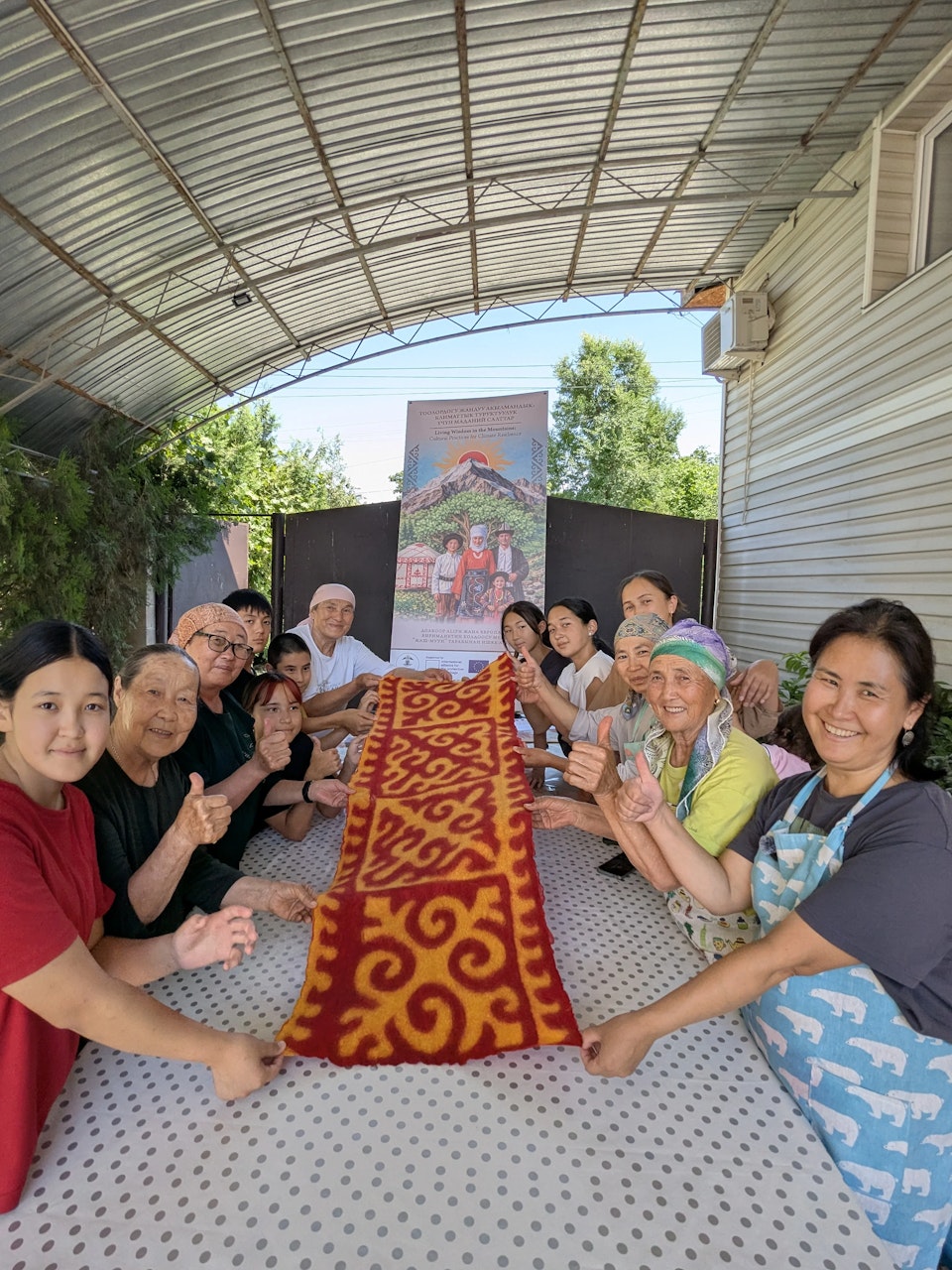
At first glance it all starts simply: sheep's wool, hot water, soap and several pairs of hands. But within a few hours the loose fibres turn into a dense felt cloth. Everything matters here — how the wool is laid out, whether there is enough water, how firmly the roll is rolled, and at what moment the material needs to be kneaded by hand again.
These techniques cannot be learned from instructions alone. They need to be seen, repeated — and, gradually, one learns to feel the material.
This is exactly how the two-day masterclass in traditional and contemporary felt went, organized by the public association "Jash-Muun" as part of the project "Living Wisdom in the Mountains: Cultural Practices for Climate Resilience".

Day One: Wool, Water and Working Together
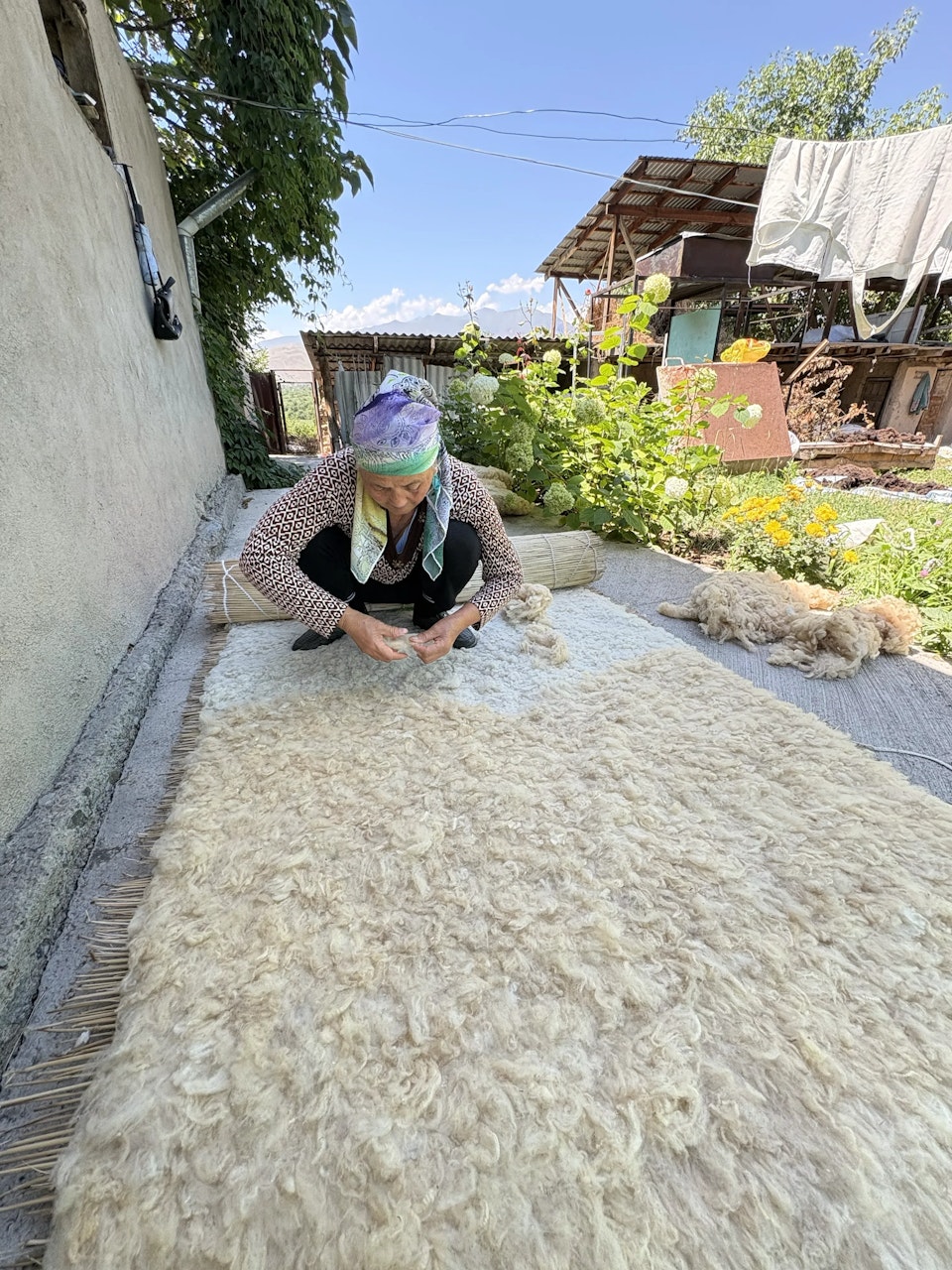
The work began with preparing the sheep's wool. Participants cleaned the fibres and laid them out in even layers, gradually forming the base of the future felt cloth.
The wool was then wetted with hot soapy water, and the careful rubbing by hand began. The first movements require care: too much pressure can disturb the layout, while too little working will not let the fibres bond well.
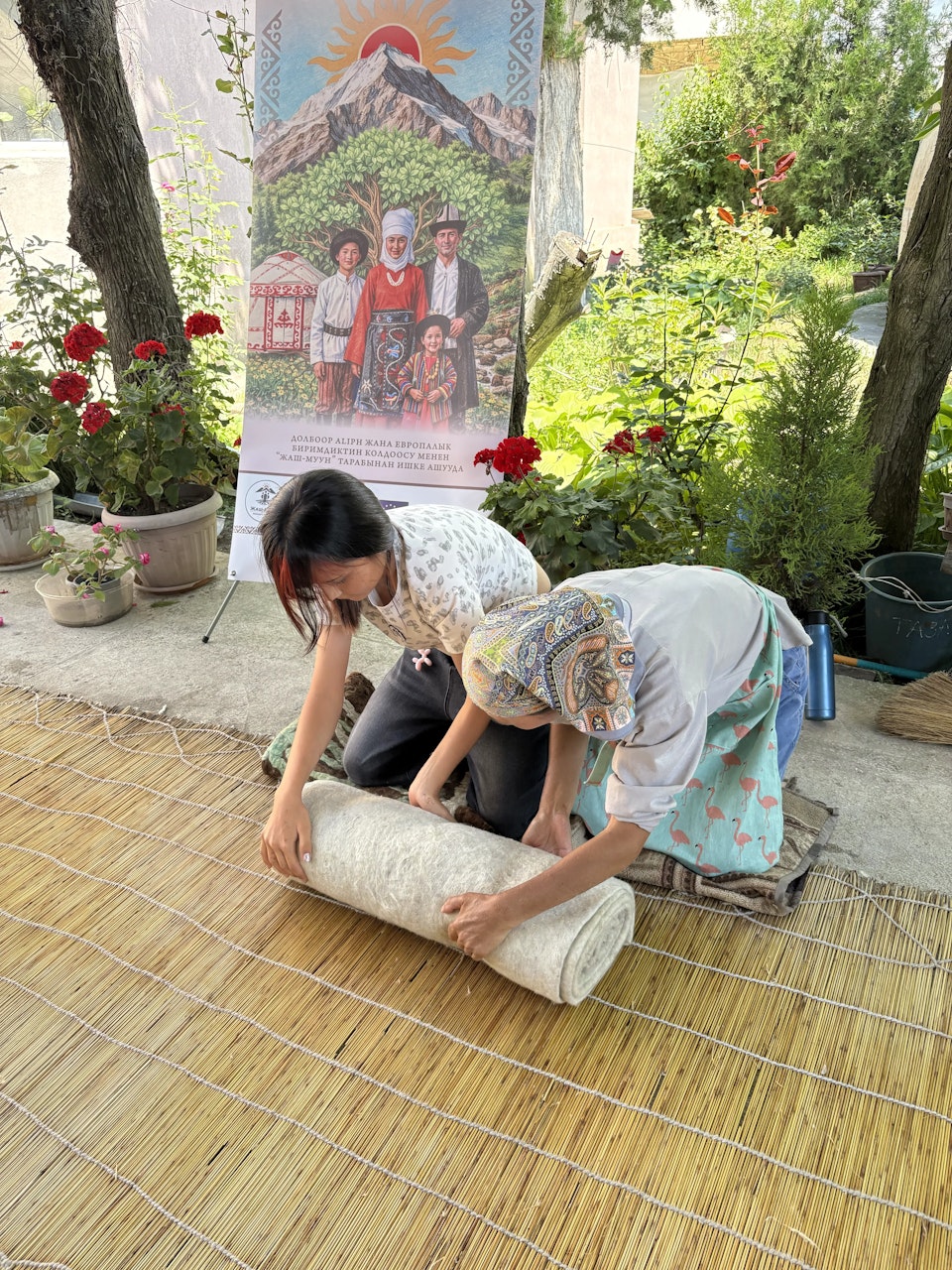
When the wool began to firm up, the cloth was rolled up together with a mat and tied fast. Then came one of the most physical stages of the work — the roll was rhythmically rolled and beaten with the feet.
Adults and children joined the process. Some were trying felt making for the first time; others had known this work well since childhood. Experienced craftswomen watched the process, corrected movements and explained when to apply more force and when to stop and check the cloth.
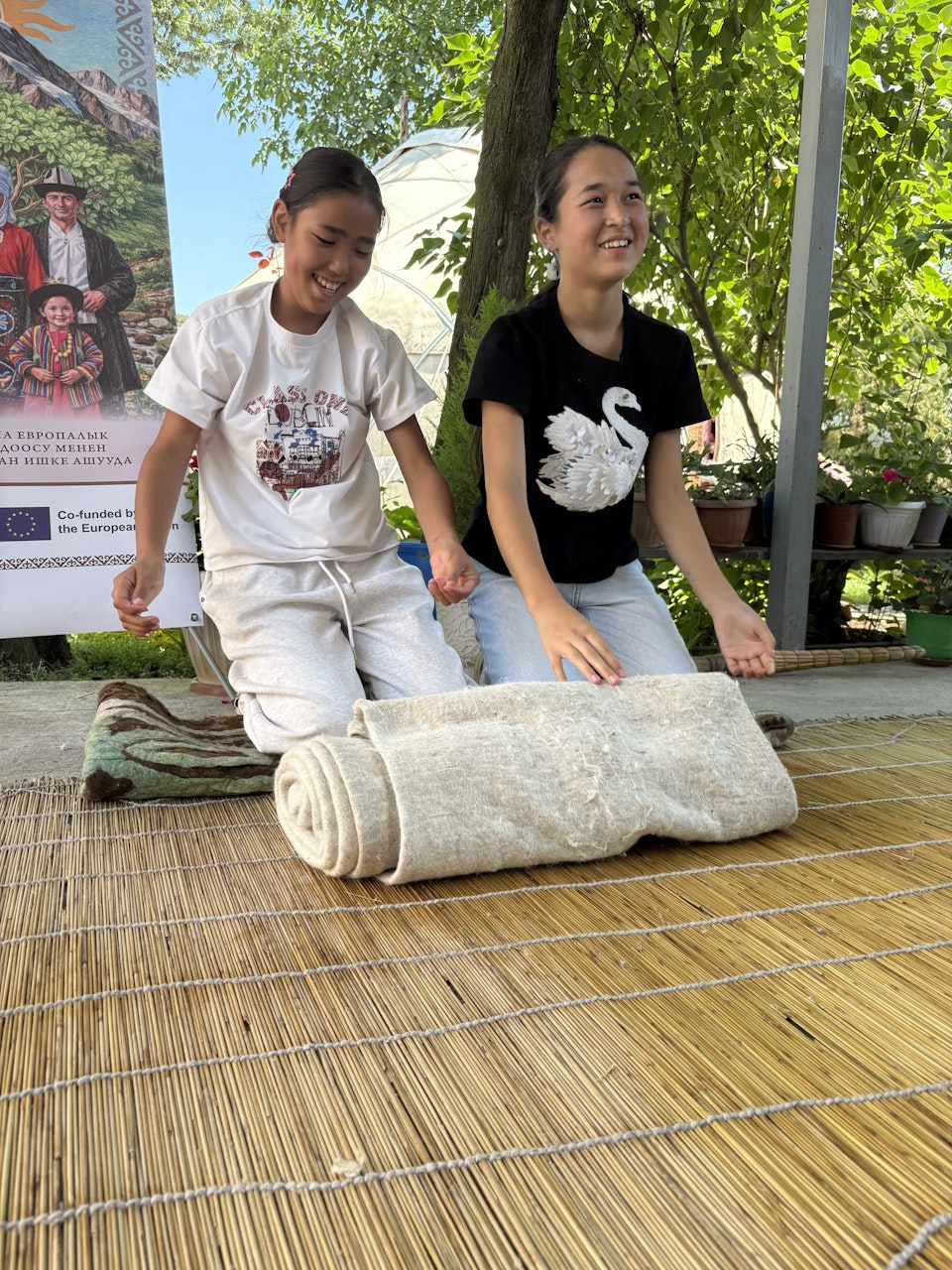
After the rolling, the roll was opened out. The felt still needed working by hand. The craftswomen took turns kneading it, checking the density and evening out individual areas.
Young participants worked alongside. They repeated the movements, asked questions and gradually joined the process.
This, perhaps, is one of the most natural ways of passing on craft knowledge. Not through a separate lecture on tradition, but directly in the course of working together.
Colour from Onion Skins, Walnut and Pomegranate
In the second half of the day, participants moved on to natural dyeing of the felt.
A large cauldron was set over an open fire. To obtain colour, they used materials that can usually be found in any household: onion skins, walnut husks and pomegranate peel.
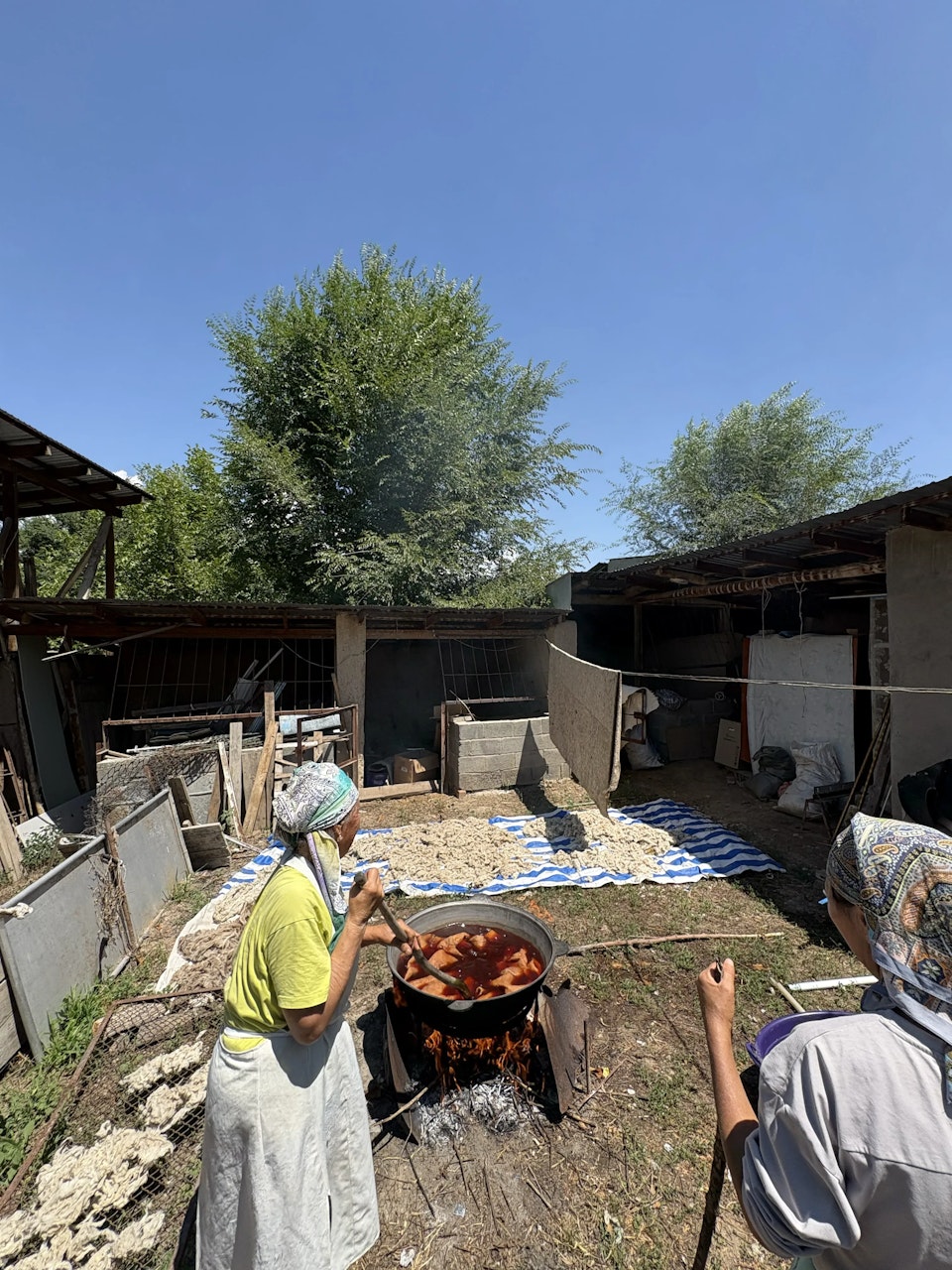
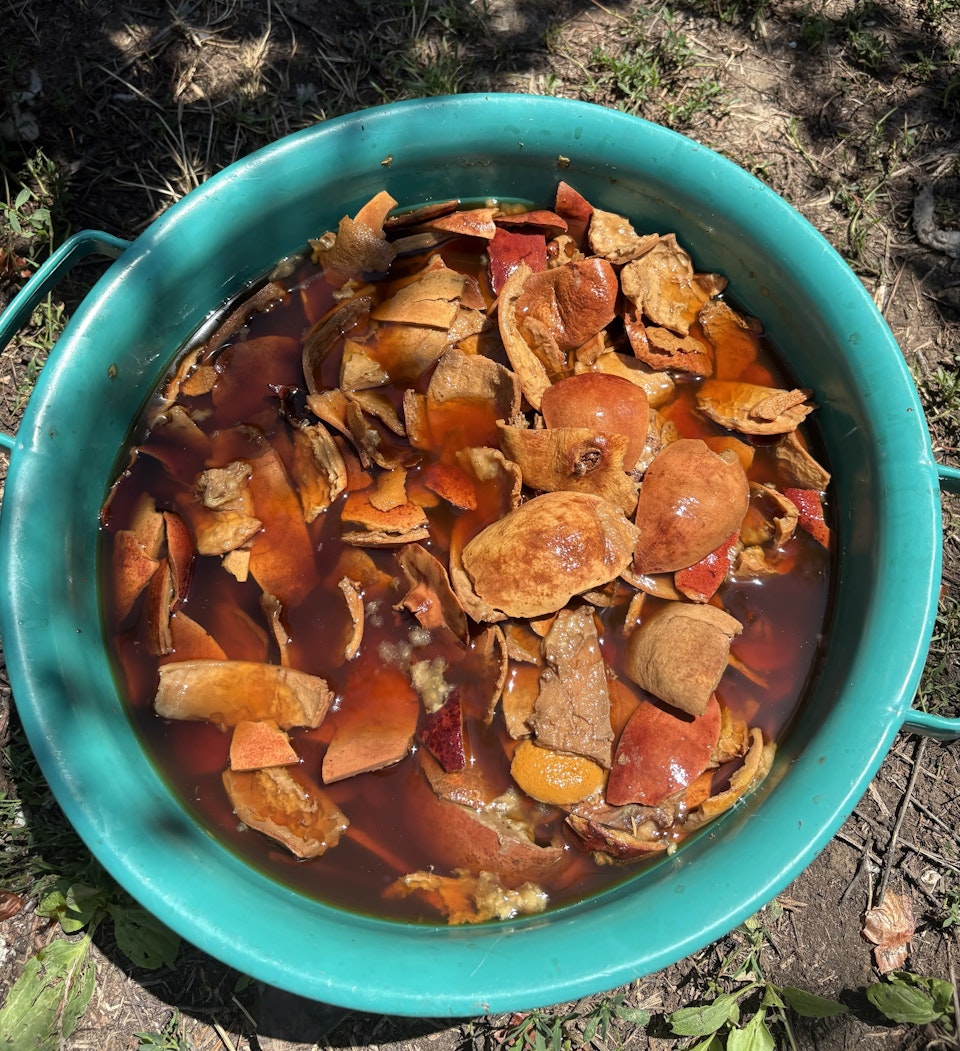
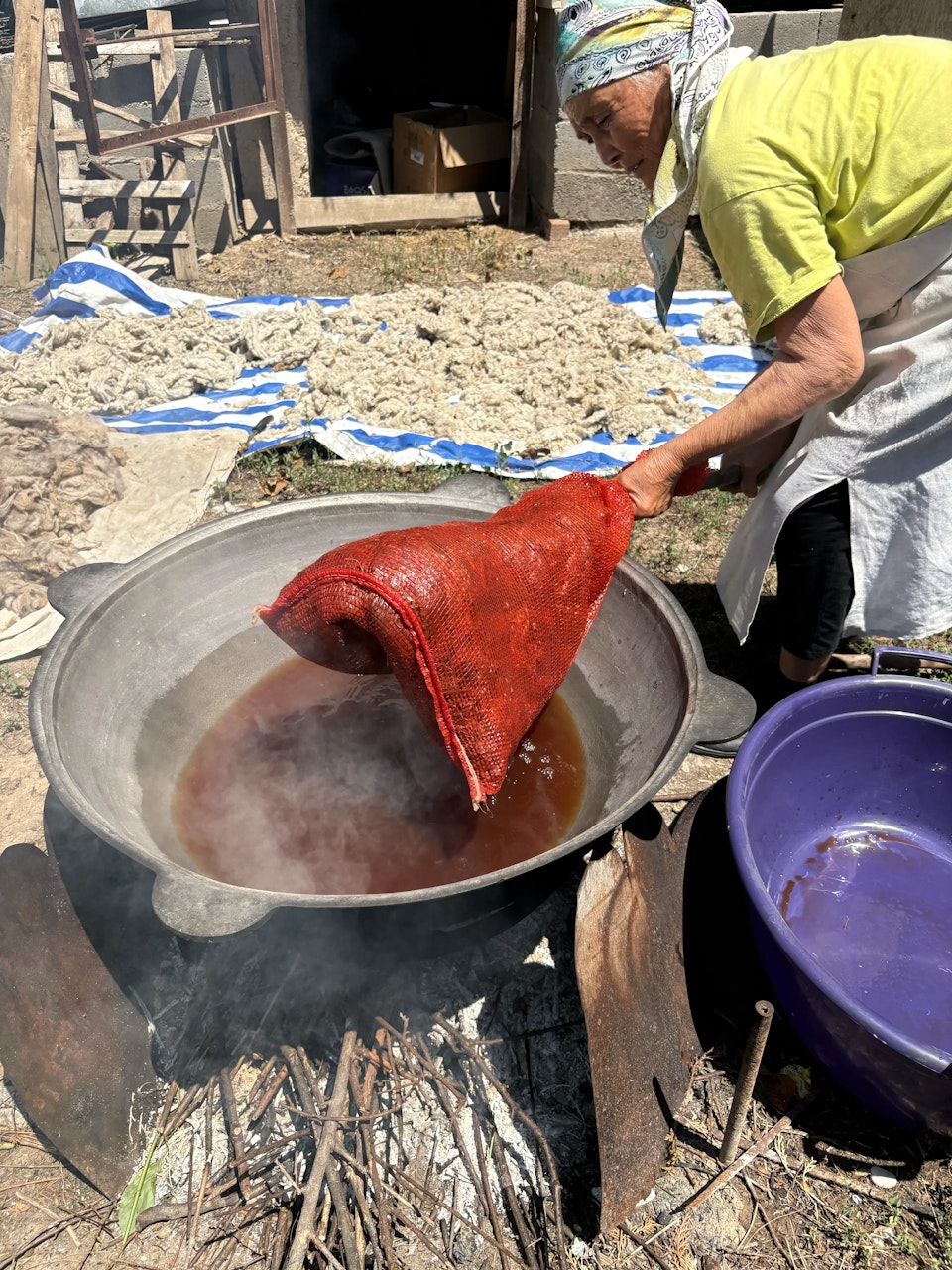
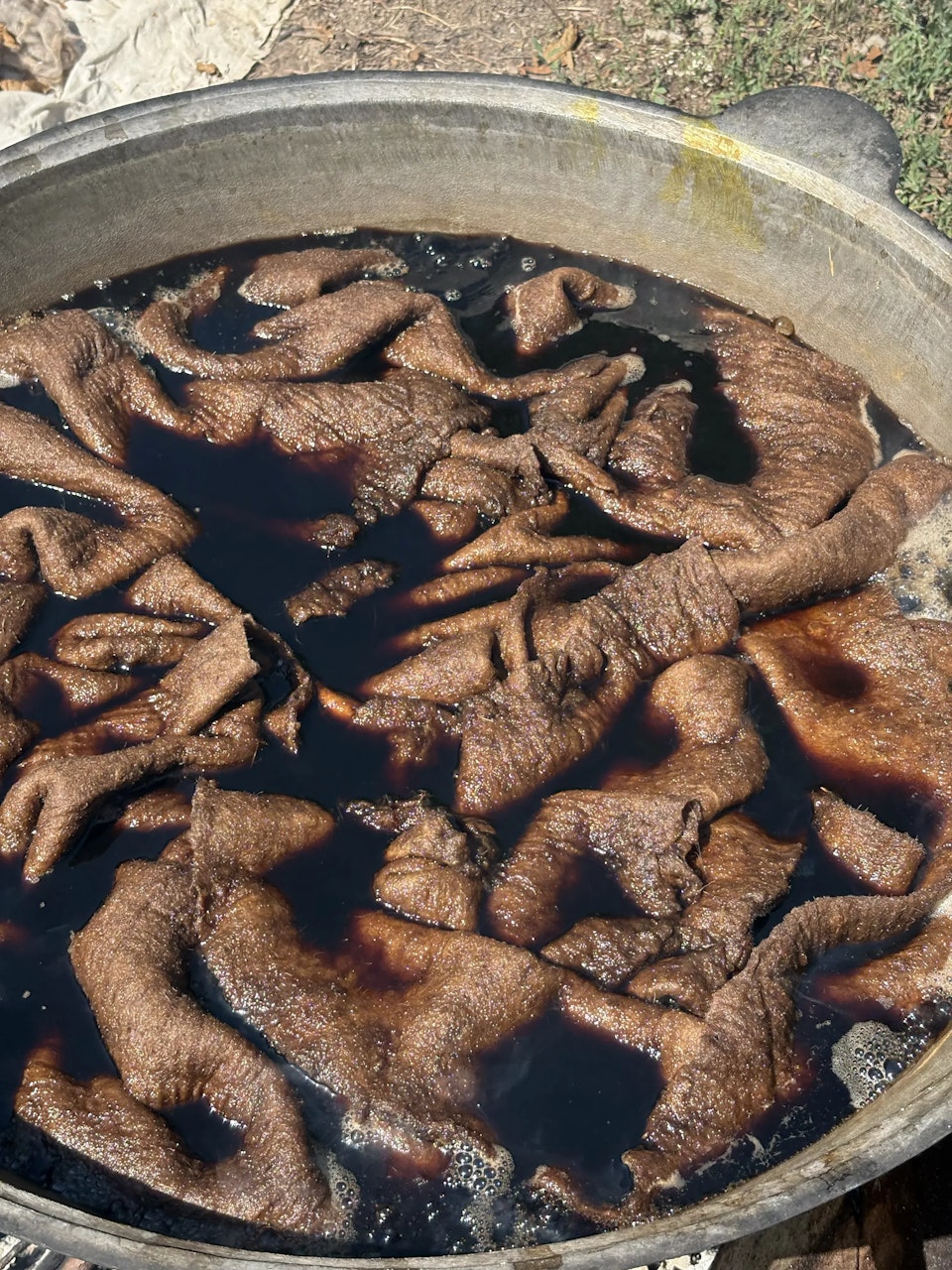
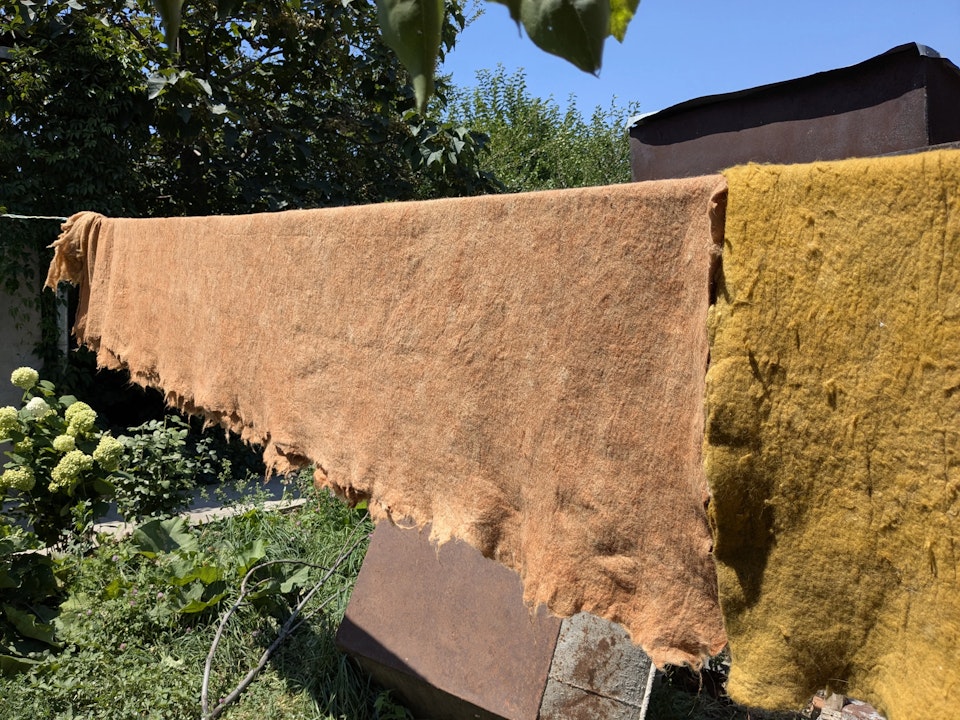
Each gave its own shade. Onion skins dyed the wool warm golden-ochre tones. Walnut husks gave a darker brown. Pomegranate peel — a yellow-olive shade.
Participants watched the colour of the material change during the process. In natural dyeing it is hard to get a perfectly precise shade in advance. The result depends on the amount of raw material, the temperature, the time and even the character of the wool itself.
For the craftswomen this is not a flaw of the technology but one of the qualities of working with natural materials.
Day Two: Traditional Ornament on Silk
The next day both the materials and the character of the work changed.
Where the day before participants had worked with dense felt, the base now was fine natural silk. The task was to try to carry elements of traditional Kyrgyz ornament into a contemporary textile piece.
They used the nuno felting technique — bonding wool fibres to a fabric base in the process of felting.
First, a prefelt — a light, pre-felted cloth — was prepared from fine merino wool. Then the craftswomen with experience in making traditional felt pieces set to work.
From the prefelt they cut out the elements of the ornament. Here it was especially clear how much experience and an understanding of the pattern's structure matter. The line, the curve and the proportions of individual details shape the overall composition.
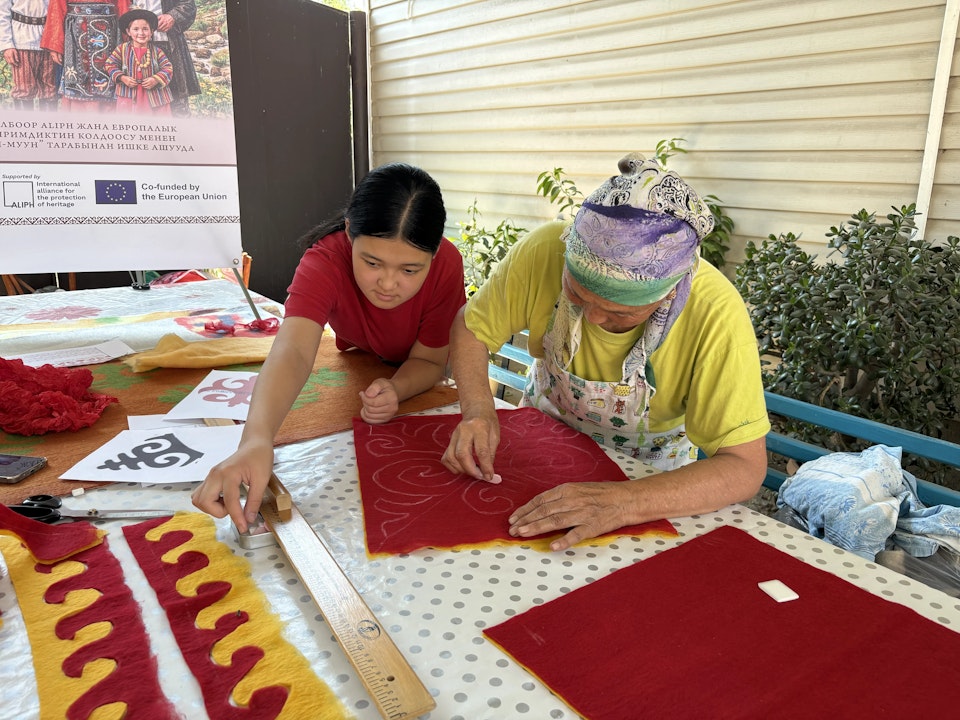
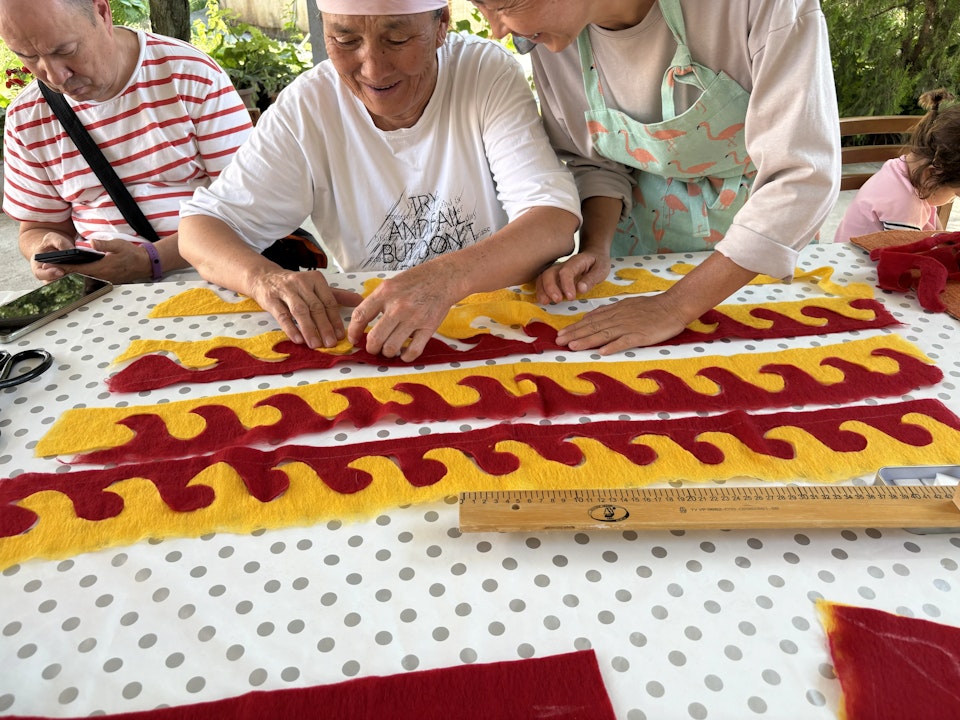
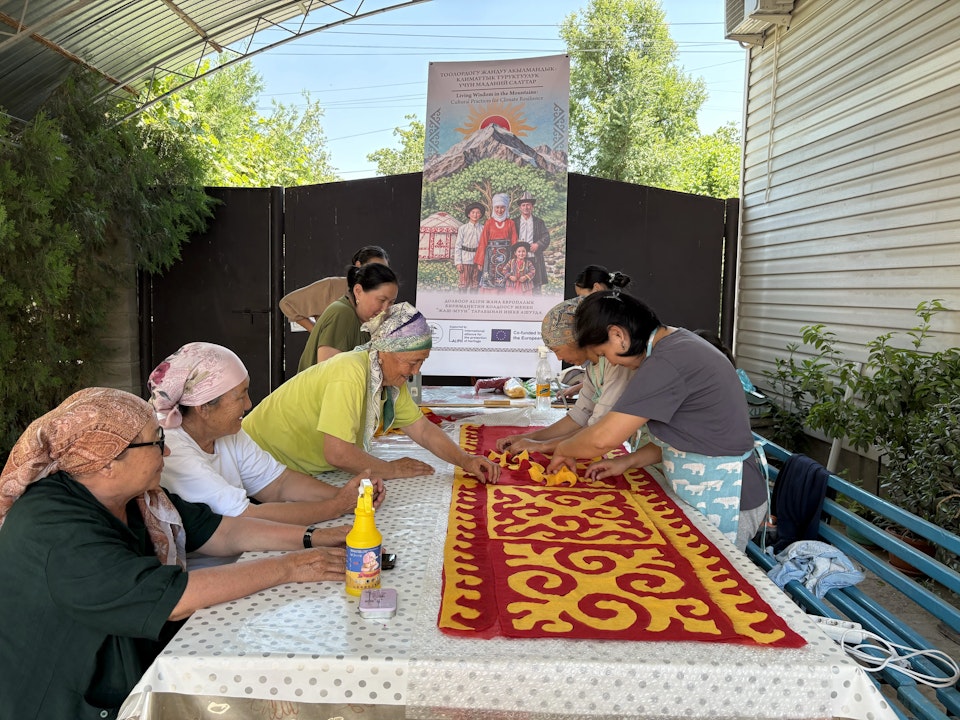
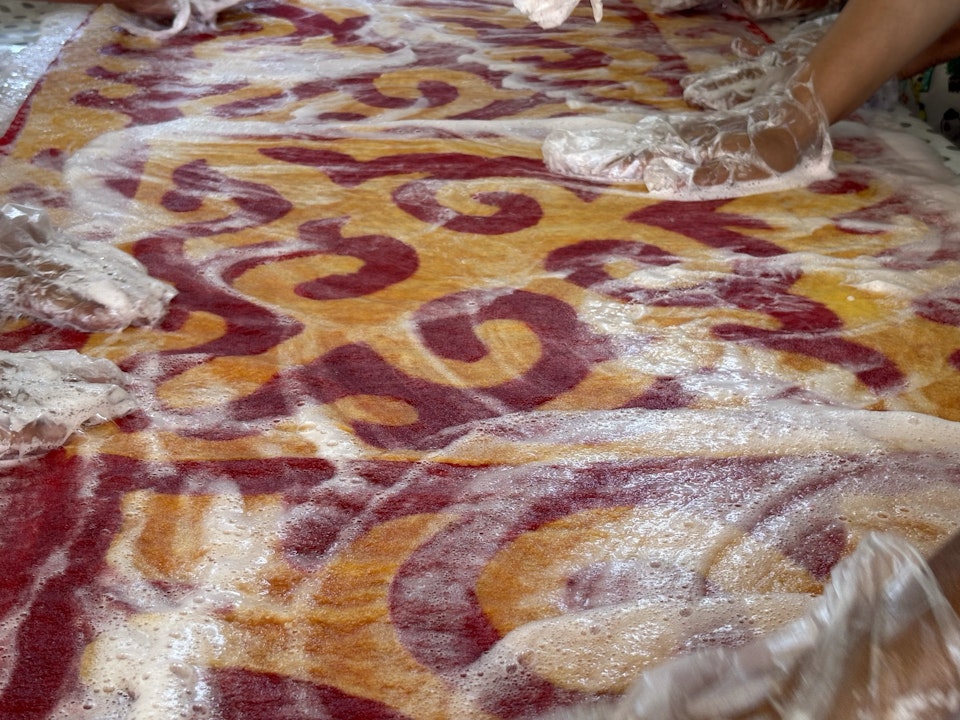
The prepared elements were laid out on the silk base. After that, participants began gradually bonding wool and fabric — rubbing the material, watching the position of the ornament, and then once again using the technique of felting in a roll.
The work demanded patience. The wool fibres had to penetrate the structure of the silk fabric and fasten to it securely.
Gradually the individual elements of the ornament became part of a single cloth.
What Happens to a Tradition When the Object Changes?
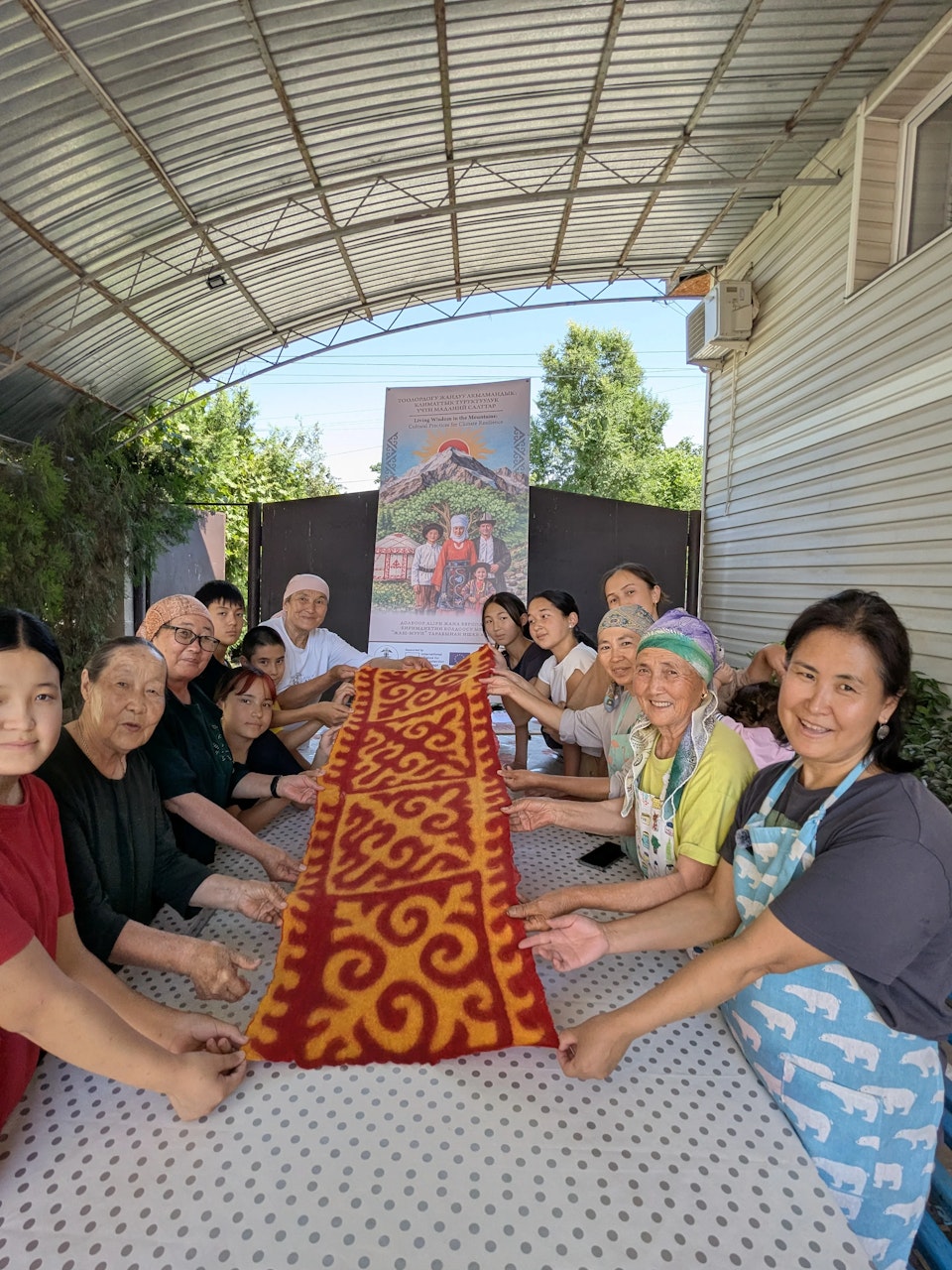
The outcome of the two days was a light felt scarf on a silk base. Its design drew on the principles of traditional Kyrgyz ornamentation.
But for the participants, the finished result was not the only thing that mattered.
The masterclass made it possible to walk the whole path from processing ordinary sheep's wool to creating a contemporary textile piece. And traditional knowledge was not treated as a fixed set of rules.
On the contrary, participants saw that the skills of working with wool and ornament can be applied in new forms.
For the project "Living Wisdom in the Mountains" this question has special significance. Today in Kyrgyzstan a large share of sheep's wool goes unused. In some rural areas it is simply thrown away or burned. At the same time, the number of young people who know the traditional ways of working wool is shrinking.
That is why preserving the craft is not only about documenting old techniques. It matters to create the conditions in which this knowledge becomes interesting and practically applicable again.
The two days of the masterclass showed a simple principle: a tradition is best preserved when knowledge is passed directly from person to person and continues to be used in practice.

Sometimes all it takes is wool, hot water, soap — and the chance to spend a few hours working together.