
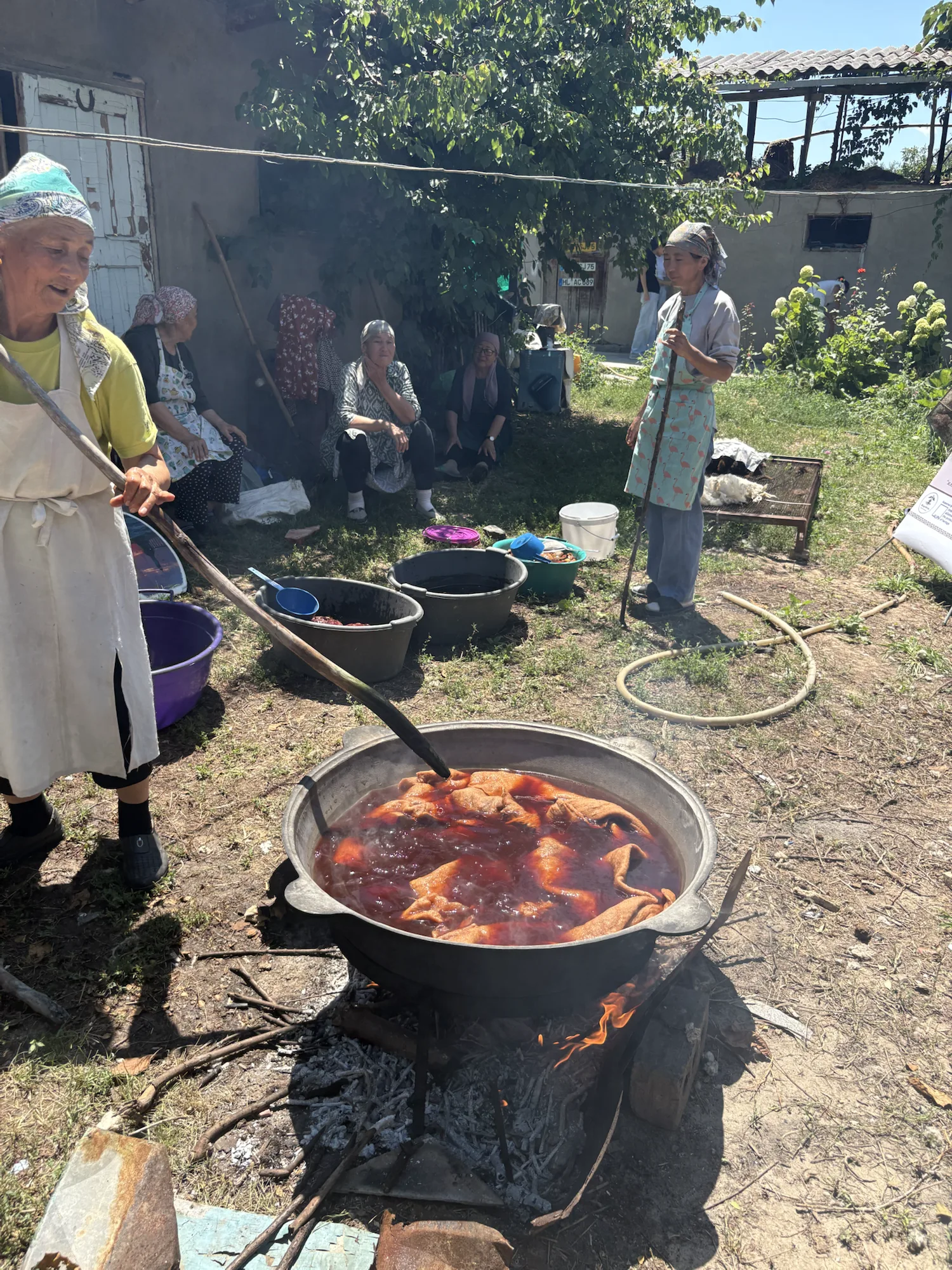

A wide view of natural dyeing over an open fire

SHADES

Natural dyeing of felt: achieving natural shades

Natural dyeing is an important part of the traditional felting craft. Using locally sourced plant materials, the craftswomen obtain a variety of natural shades, preserving both the ecological nature of the technology and the knowledge of working with natural materials passed down from generation to generation. This workshop introduces participants to the main stages of preparing natural dyes, dyeing the wool and fixing the resulting colour.

The stages of natural dyeing

  1. Extracting the natural pigment
  2. Loading the material and heat treatment

  3. Fixing the colour and rinsing

Extracting the natural pigment

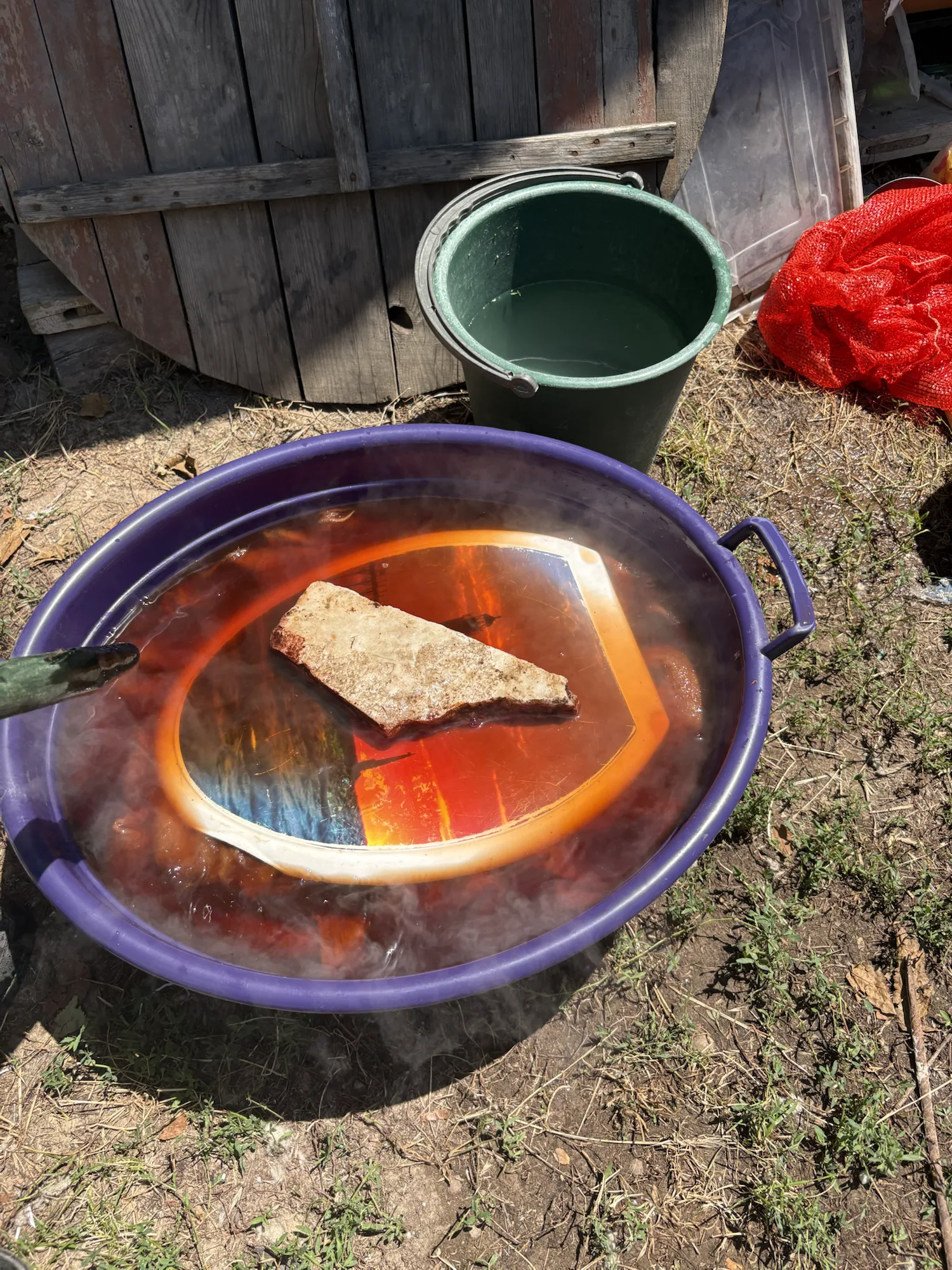
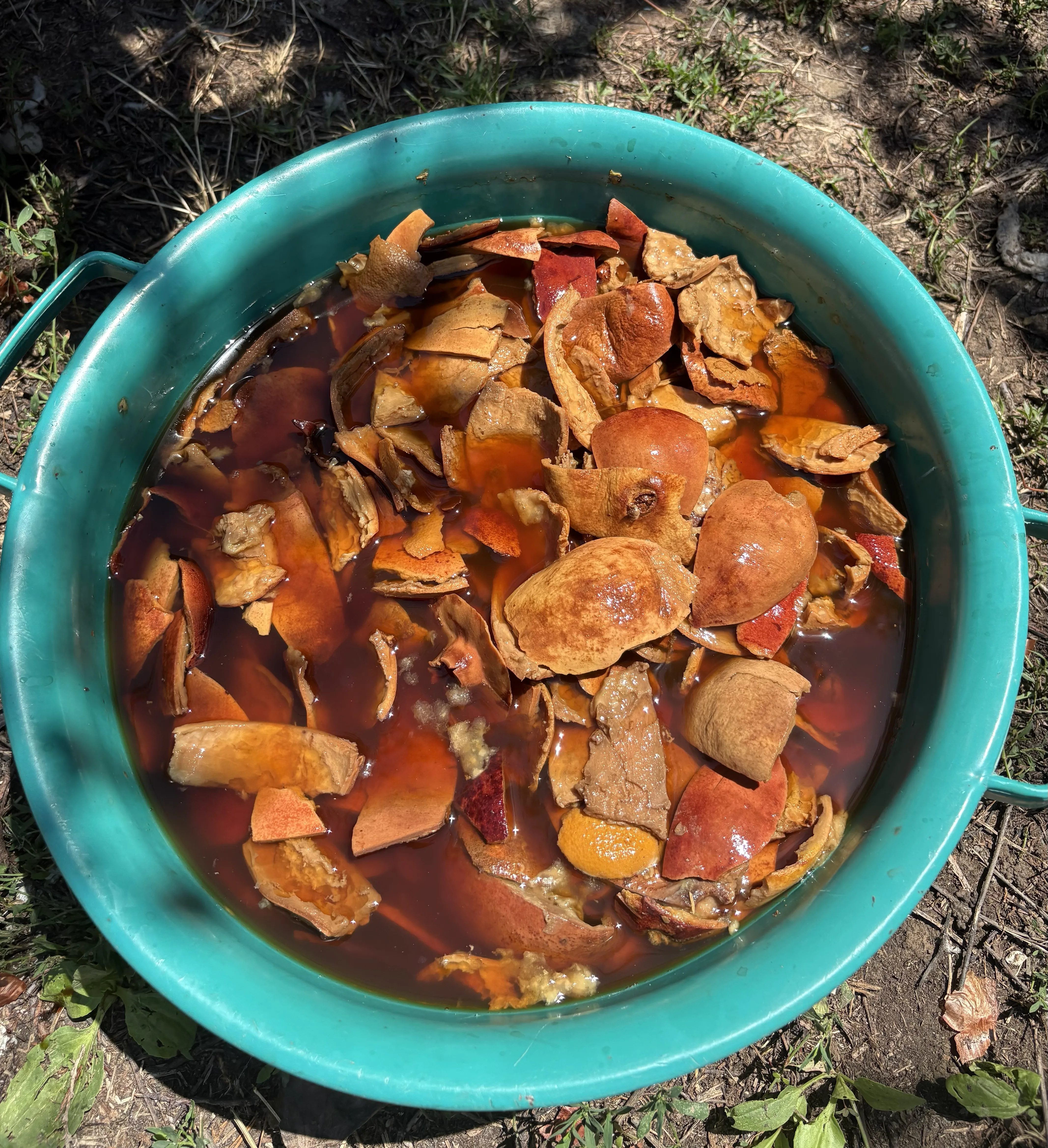
Peels and husks for natural dye soaking in a basin
  • Place the plant material into mesh bags. Set a large cauldron over an open fire, fill it with water to about one third of its volume, add the chosen material and top up with water so that it is completely covered.
  • Bring to a boil and simmer over low heat according to the table.
  • Leave the decoction for 12–24 hours to extract the maximum amount of pigment.
  • Strain the dye decoction through a sieve or a dense cloth.
Loading the material and heat treatment

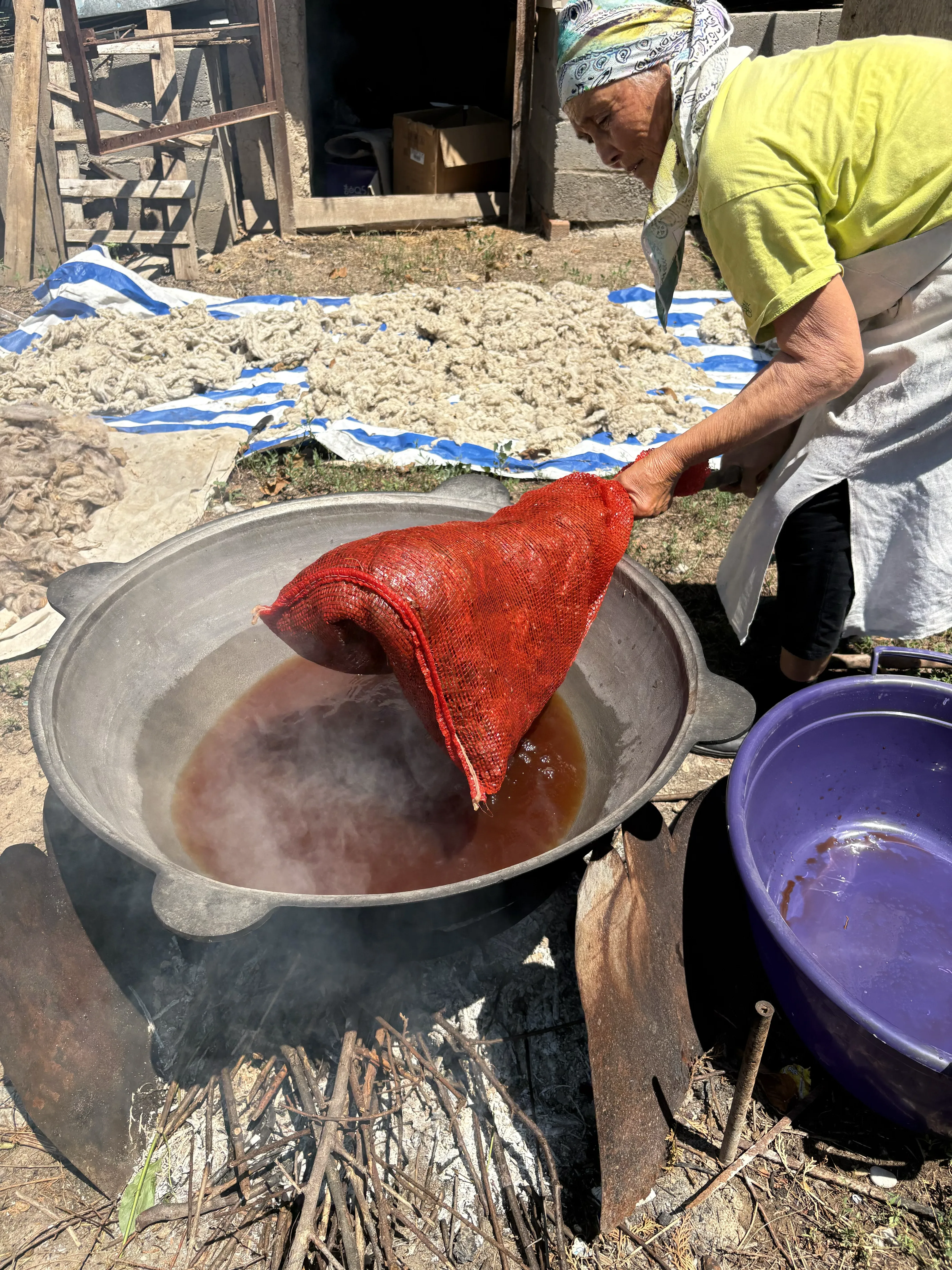
A craftswoman lifts a dyed felt cloth from the steaming cauldron The material simmering in the dye vat over the fire
  • Pour the strained decoction back into the cauldron, add salt (5 tablespoons per 10 litres) and dissolve it completely.
  • Immerse the felt or wool in the decoction and bring to a boil. The material must be completely submerged in the solution.
  • Boil for the time indicated in the table.
  • About 10–15 minutes before the end of boiling, stirring constantly, add whey (0.5 litre per 10 litres of decoction).
  • After boiling, leave the material in the decoction for another 12–24 hours under a light weight.

Fixing the colour and rinsing

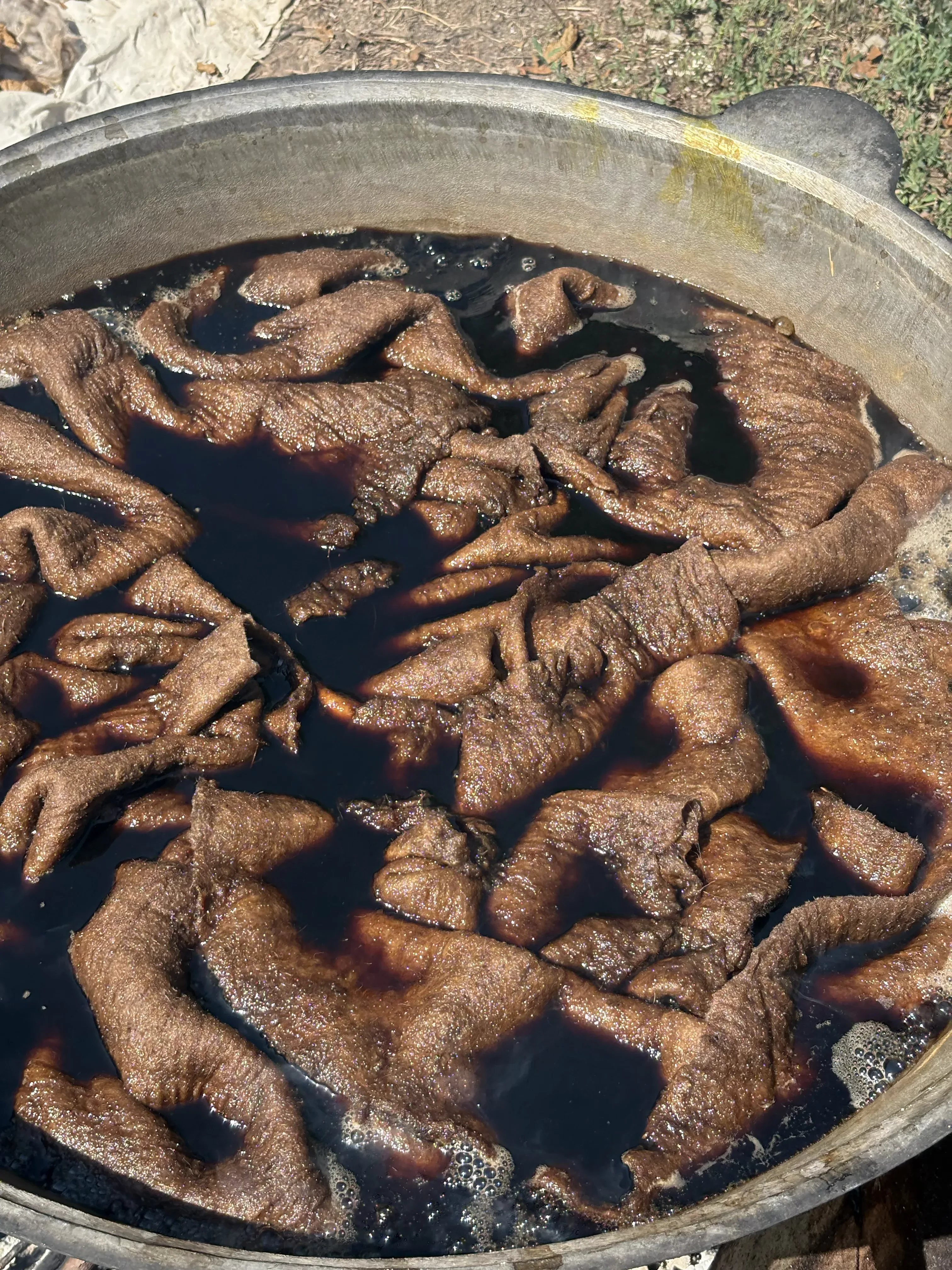
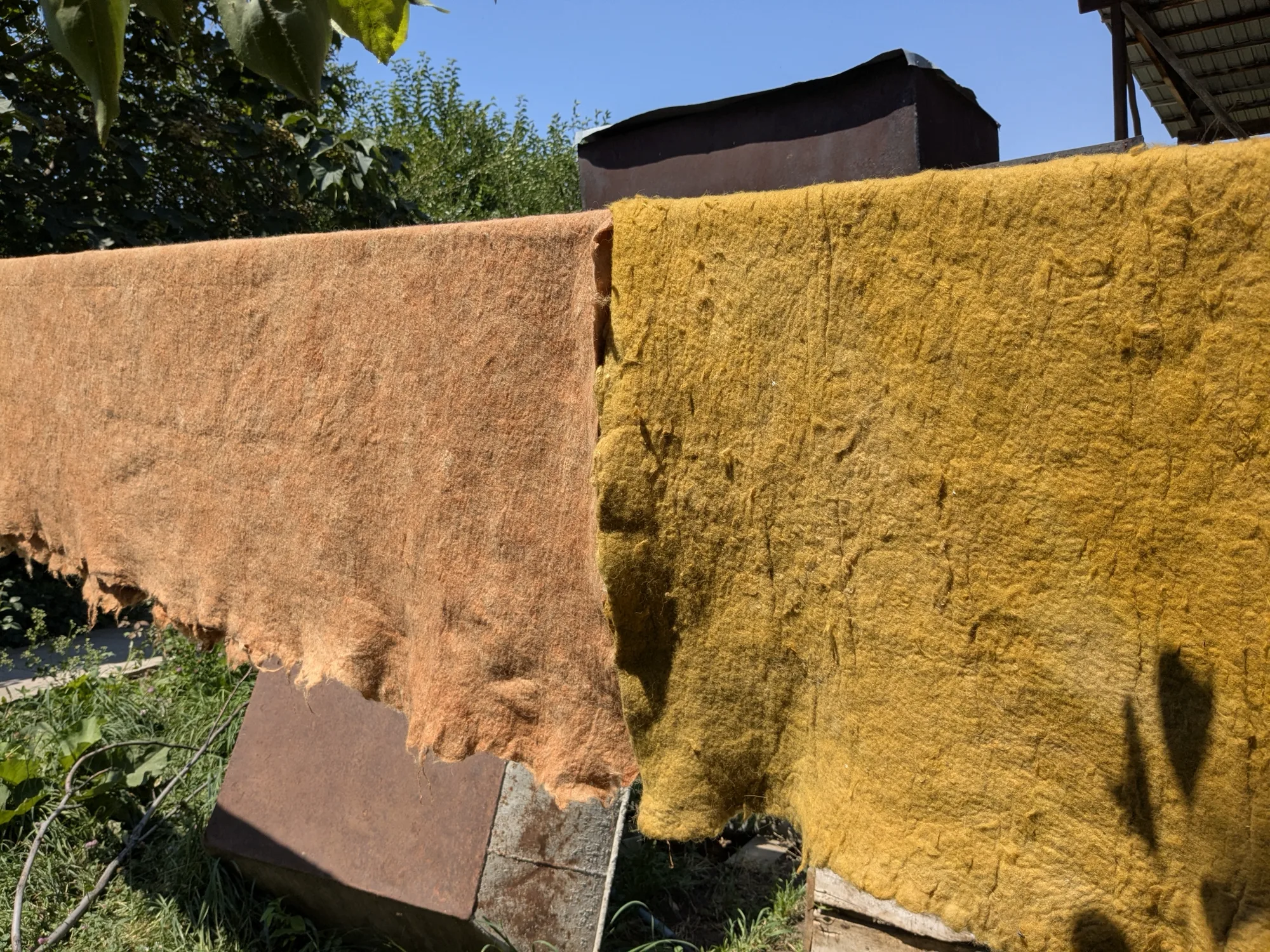
Felt dyeing in a dark decoction in the cauldron The dyed cloths drying on a line — unique shades
  • Remove the felt and rinse it in clean water.
  • Immerse it in a vinegar solution (5 tablespoons per 10 litres of water) for 10–15 minutes.
  • Wring it out gently and dry it flat, spread out on a horizontal surface in the shade.

Materials and tools needed

Finished undyed felt or cleaned sheep wool
A large cauldron (preferably thick-walled)
A source of open fire (a campfire or a stove)
Natural plant materials: onion skins, walnut husks, pomegranate peel
Whey
Salt
Table vinegar

Table of the various shades obtained

Each kind of plant material yields its own characteristic natural shades. The duration of preparing the decoction and of dyeing affects the intensity of the final colour.

Plant materialColourBoiling the decoctionDyeing
Onion skinsGolden, orange-brown30–45 min30–45 min
Walnut husksRich brown, dark chocolate1.5–2 hours (soak overnight)45–60 min
Pomegranate peelKhaki, mustard yellow, golden1 hour45 min

Important

In natural dyeing it is practically impossible to obtain exactly the same shade twice. The final result depends on the amount of plant material, the quality and hardness of the water, the temperature, the duration of dyeing and the characteristics of the wool. For experienced craftswomen this is not a flaw but a natural feature of traditional natural dyeing, thanks to which every piece takes on its own unique shade.

Practical recommendations

  • Before dyeing, test the dye on a small sample of wool.
  • Use soft water where possible.
  • The longer the material stays in the dye solution, the more intense the shade.
  • Dry the felt in the shade, avoiding direct sunlight.