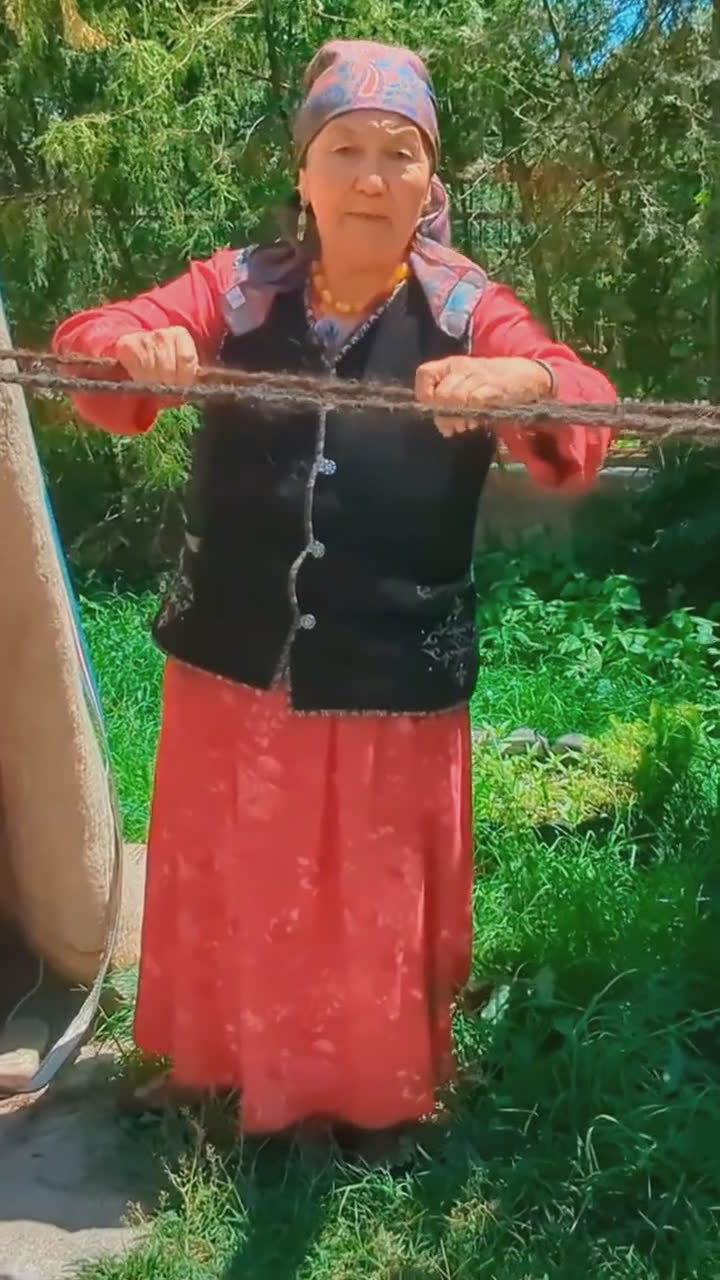
Preparing the raw material
The main material is long hair from a horse's tail and mane. Preference is given to long, elastic and undamaged hair.
A small amount of well-cleaned sheep wool is also used. It is not the main material but plays a supporting role — it holds the horsehair together at the initial stage of twisting and helps form a dense blank.
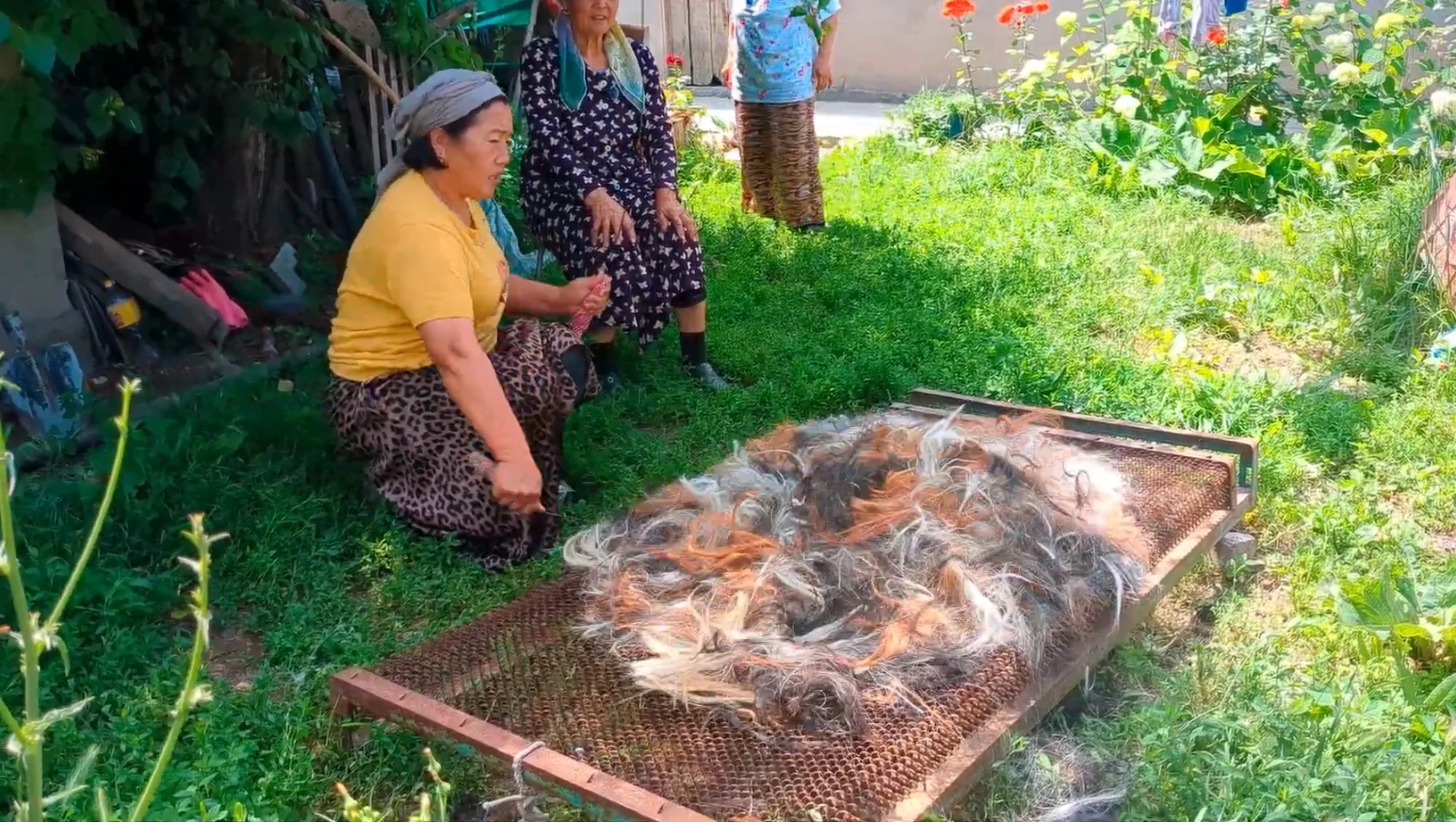
Cleaning and fluffing the horsehair
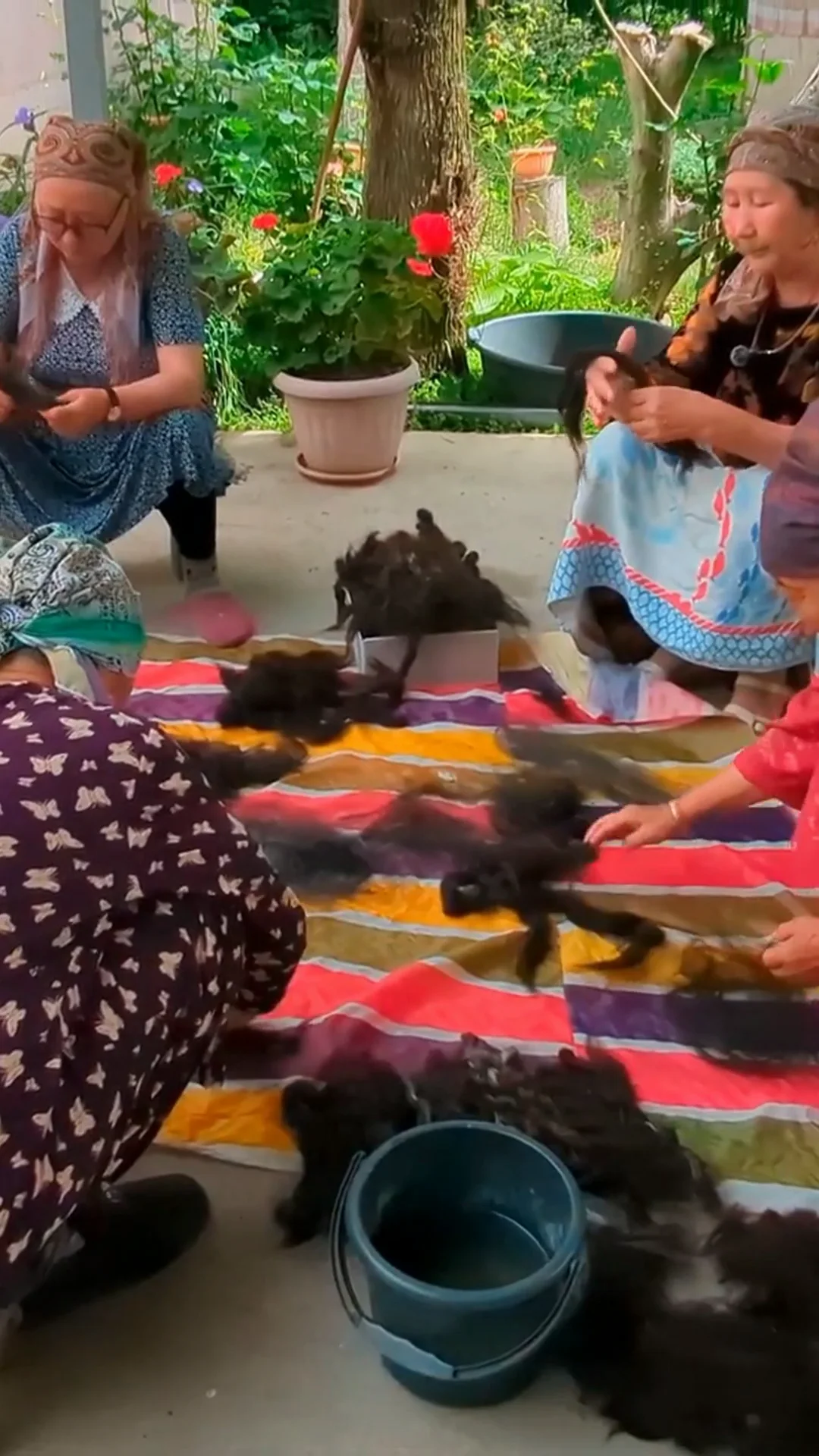
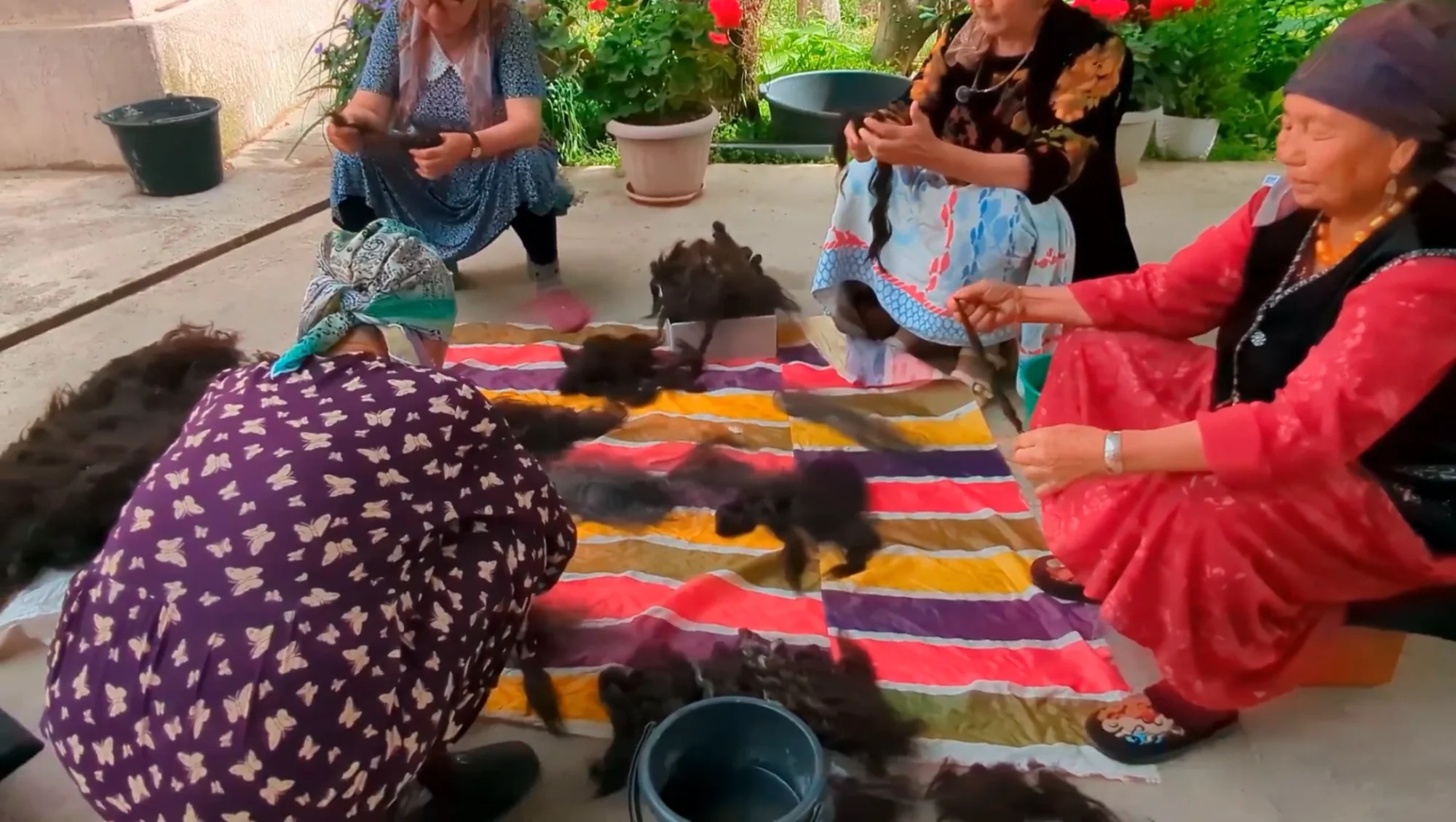
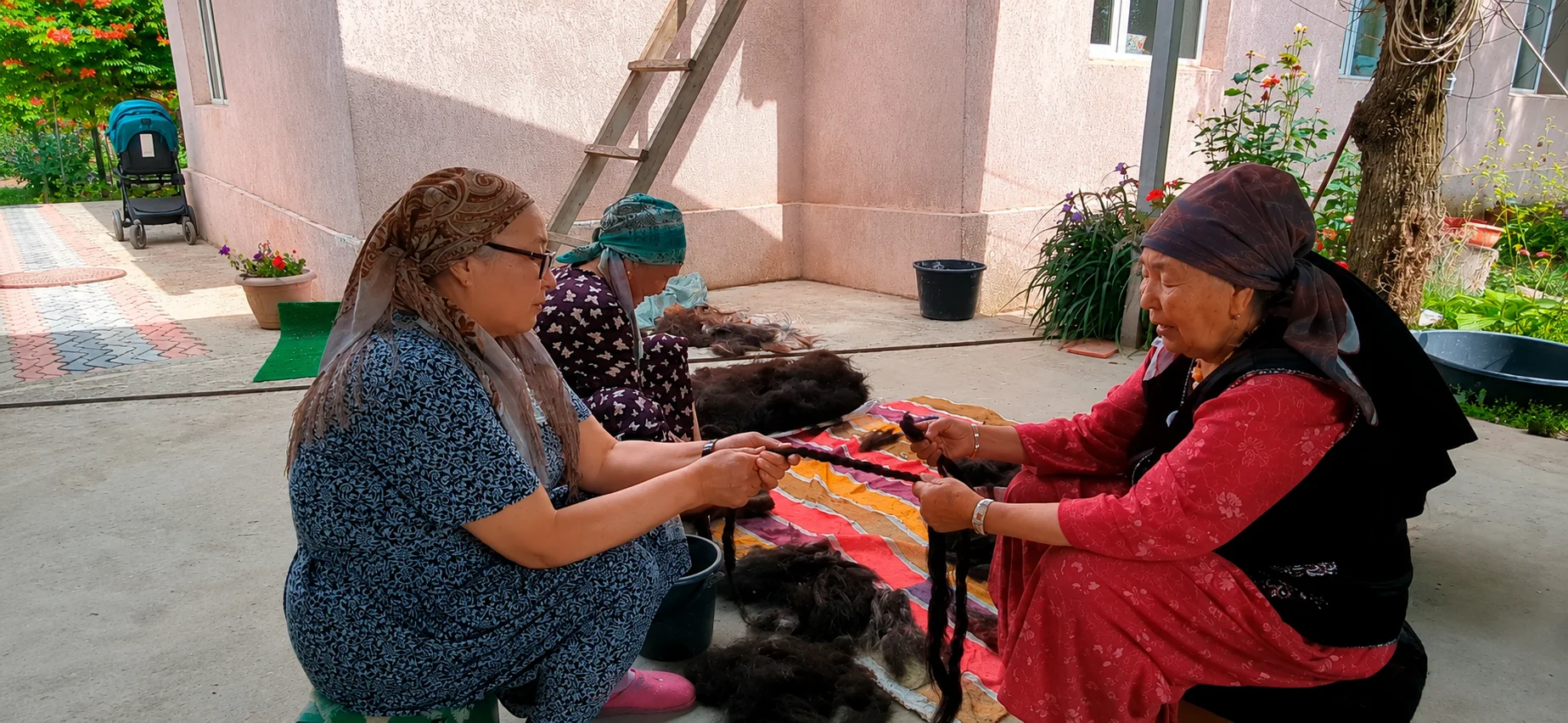
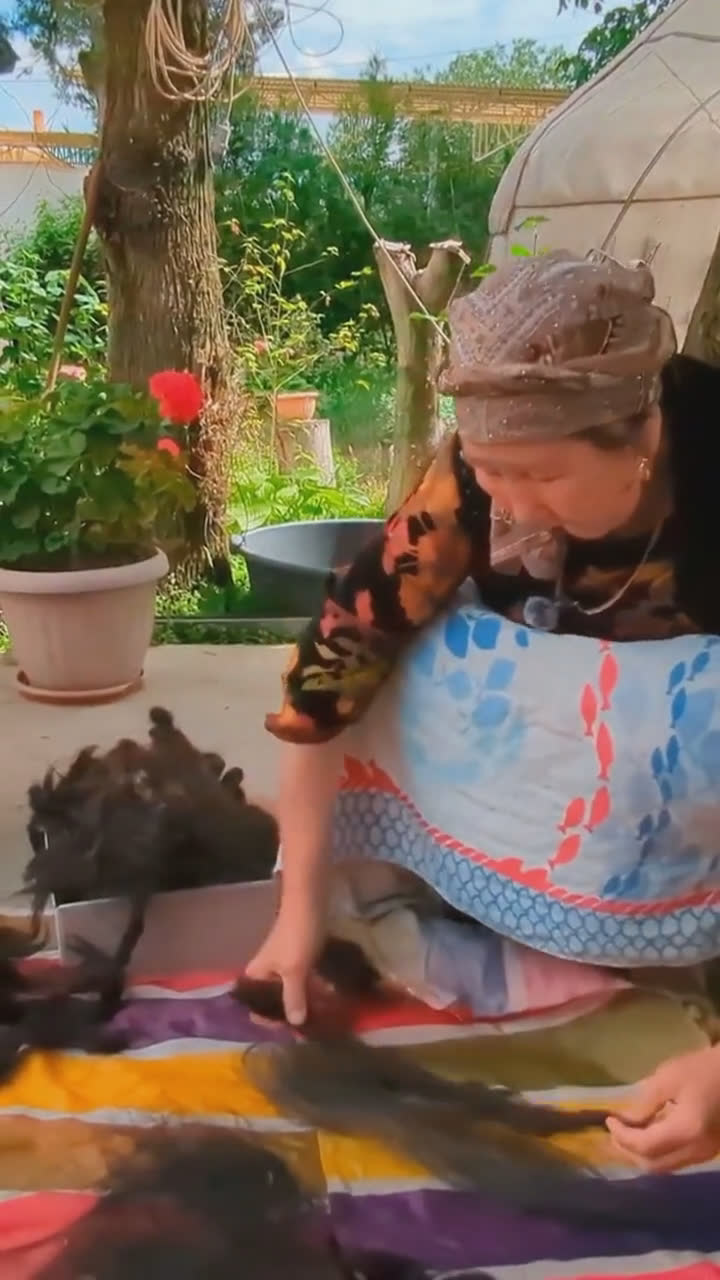
Before work begins, the hair is carefully sorted by hand, removing debris and short or damaged hairs.
Then the hair is beaten many times with special wooden sticks or rods. During this process:
- the remaining dust and dirt are removed;
- tangled hairs are straightened out;
- the material becomes softer and airier;
- the individual hairs separate from one another more easily.
This stage makes the subsequent forming of the blank much easier.
Forming the blank
After cleaning, the maker spreads the hair out evenly, forming a long layer.
The initial blank is usually about 25–30 cm wide, while its length is determined by the required length of the future rope.
A thin, even layer of sheep wool is laid over the layer of horsehair.
The wool is distributed very carefully. Its amount must be minimal — just enough to hold the hair securely during the primary twisting without impairing the properties of the finished product.
Rolling up
The prepared layer is carefully rolled into a long cylindrical roll.
The makers try to keep the same thickness along the whole length of the blank.
The evenness of the future kyl-arkan depends on the quality of this stage.
Primary twisting
The rolled blank is lightly moistened with water.
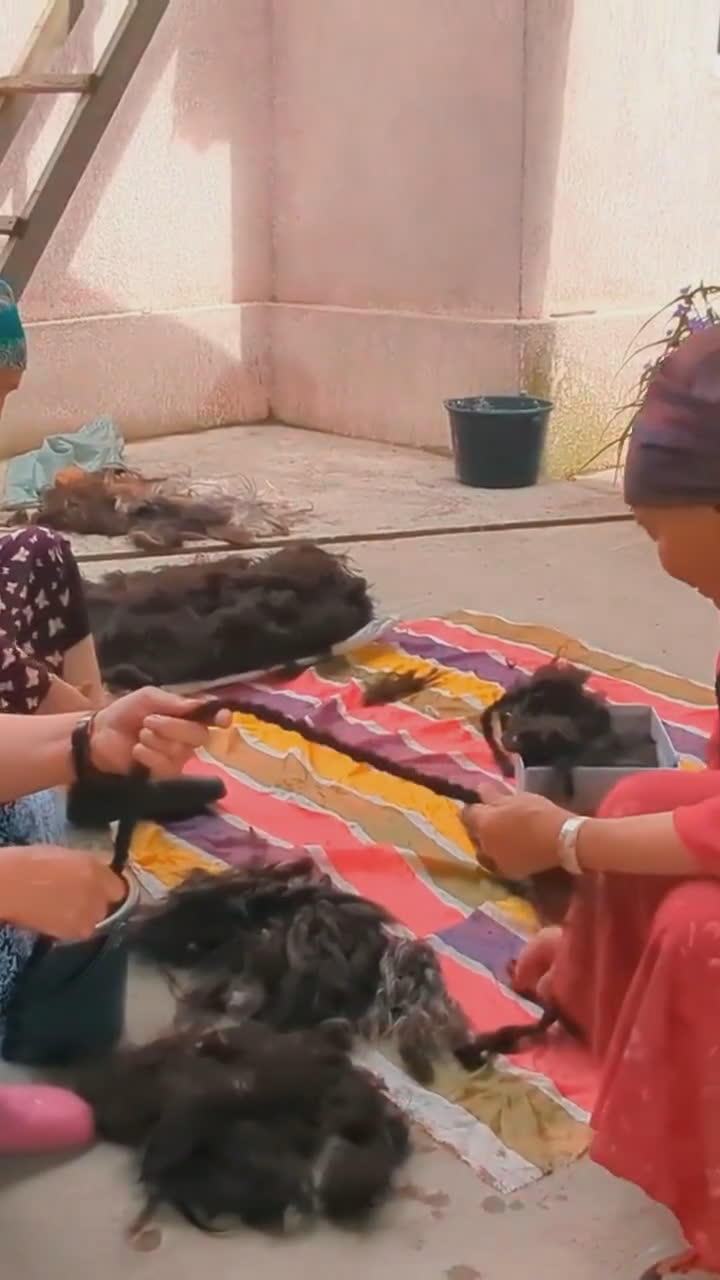
The makers then begin to twist it by hand, gradually turning the loose roll into a dense, long cord — a strand.
Throughout the work, the same tension is constantly maintained along the whole length.
As it is twisted, the hairs interlace with one another, while the small amount of wool fixes the structure of the product.
Making separate long cords
In this way several independent cords are made one after another. Then two thin cords — strands — are twisted together.
While the tradition was being documented, the makers produced three separate two-ply cords, each about 7–8 metres long.
Each of them goes through the same processing and has roughly the same thickness.
Joining the separate parts
Once several long cords have been made, the most critical stage begins.
The ends of the separate cords are joined together, evenly weaving the hair of one part into the other.
The joint is carefully twisted by hand so that, once the work is finished, it is practically indistinguishable from the rest of the rope; it is tied firmly and passed through the kerege.
It is the maker's experience that makes the joint almost invisible and keeps the product equally strong along its whole length.
Final twisting through the yurt's kerege
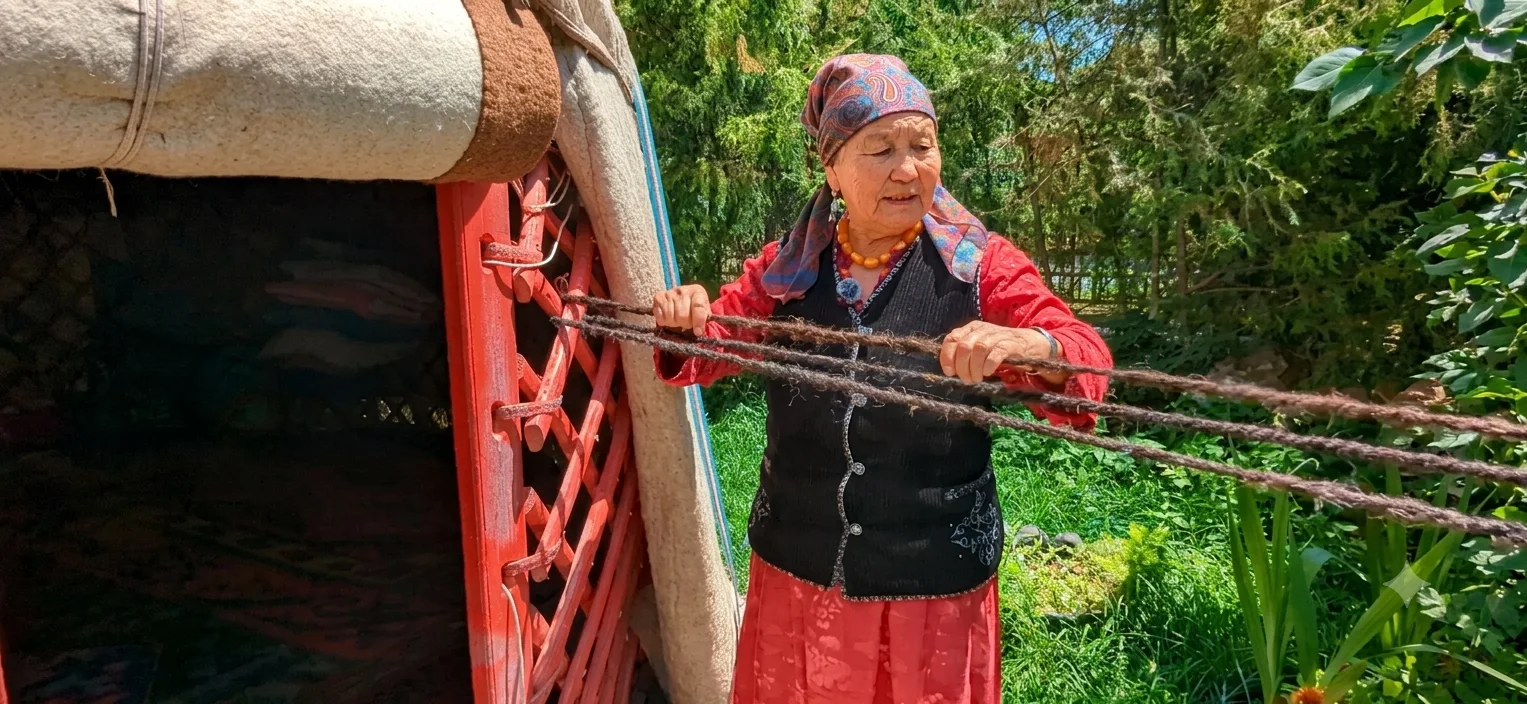
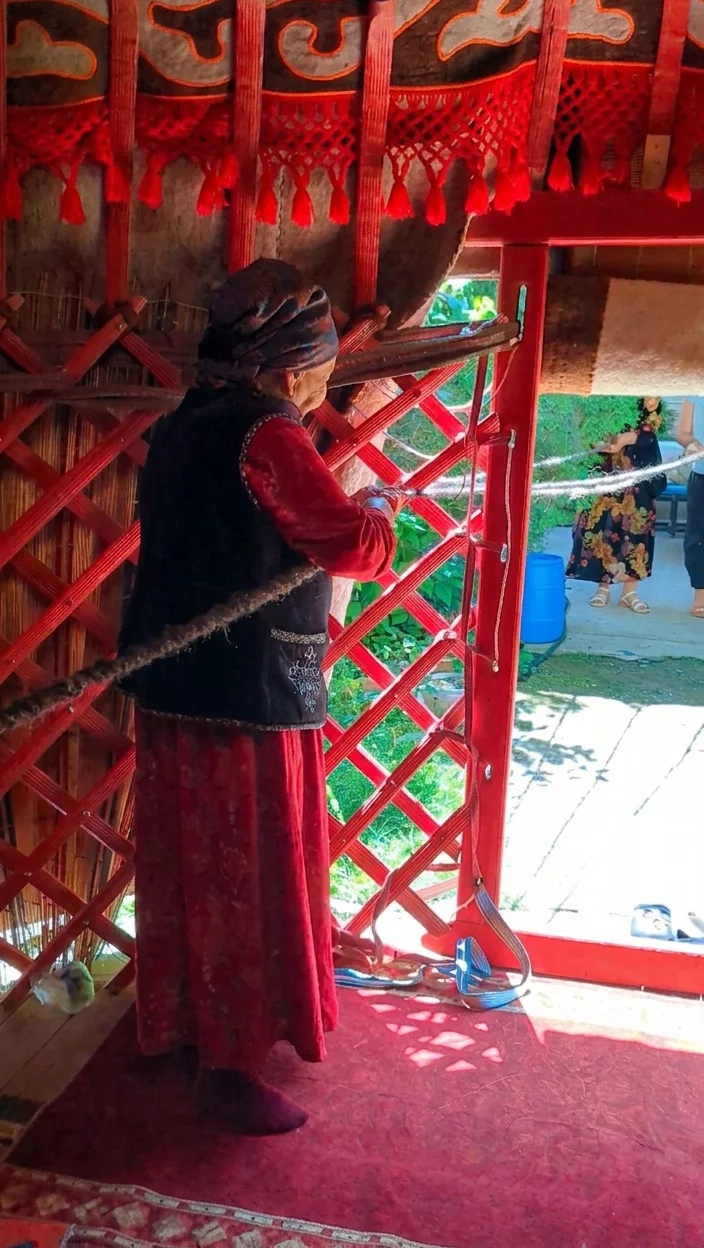
To obtain the densest and strongest kyl-arkan, a traditional method of final twisting is used — with the kerege, the yurt's wooden lattice wall.
One maker stands outside the yurt, the other inside.
The three two-ply blanks are passed through the openings of the kerege.
The makers perform different actions at the same time:
- outside, they constantly rotate and pull the rope taut;
- inside, they smoothly draw it through the kerege, keeping a constant tension.
While rotating, the maker uses a wooden spoon, which helps increase the torque and gives a denser interlacing of the fibres.
At the same time, the kerege acts as a natural guide, making it possible to keep the same tension along the whole length of the product.
This stage continues until the kyl-arkan acquires the necessary density, springiness and even thickness.
Quality check
Once the twisting is complete, the makers carefully inspect the finished rope.
They check:
- the evenness of the thickness;
- the absence of weak spots;
- the strength of the joints;
- the tightness of the twist;
- the elasticity of the product.
If necessary, individual sections are twisted further by hand.
Using kyl-arkan
The finished kyl-arkan is used in the most varied areas of the traditional household.
It is used:
- in pitching and reinforcing the yurt;
- for making parts of horse harness;
- in transporting loads;
- for household needs;
- in binding wooden structures.
According to local makers, kyl-arkan has one more important property. Because of the distinctive smell of horsehair and its dense, prickly structure, it was traditionally laid around yurts or farm buildings. Such a rope was believed to help keep away snakes and some other animals, since they avoid the smell of large hoofed animals and are reluctant to cross such an obstacle.