A day-long Nooruz ritual where grain turns into sweetness without a single gram of sugar.
24 hours by the fire
Making sumolok is not simply a matter of following culinary proportions. It is a day-long marathon in which every action was thought through by the ancestors, and every ingredient carries deep symbolic meaning. The way it is made is unique: there is not a single gram of sugar in it, yet fermentation of the wheat makes it very sweet — in texture it resembles a thick cream or paste tasting of caramel and nuts. We captured the entire process on camera so that you can walk this path together with the people of Toktogul — from the first sprouted grain to the final blessing of the elders.
From grain to dawn
sprouting
laying the stones
ashar by the fire
simmering
kazan achuu · bata
The mystery of sprouting: The green manifesto of spring
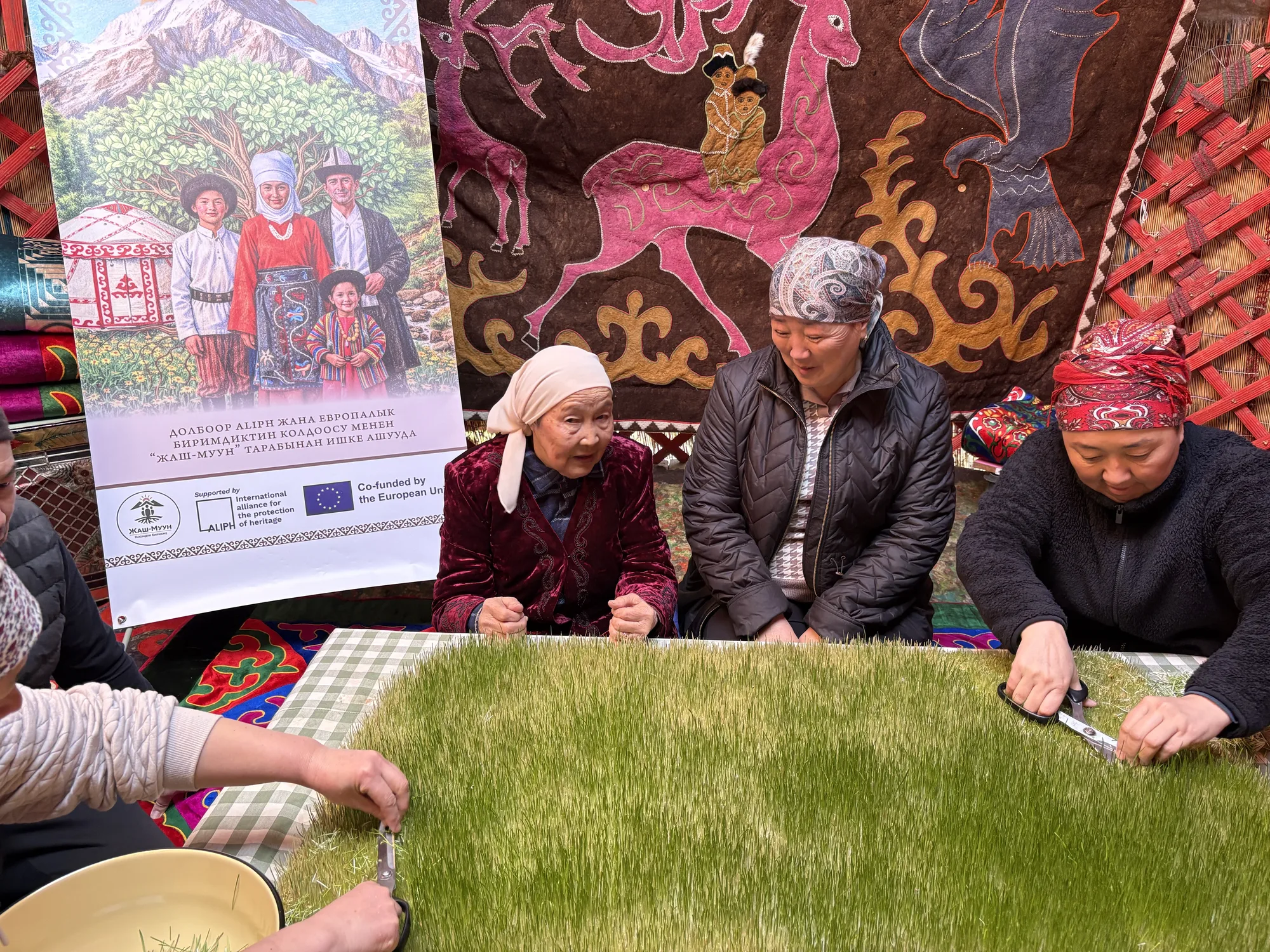
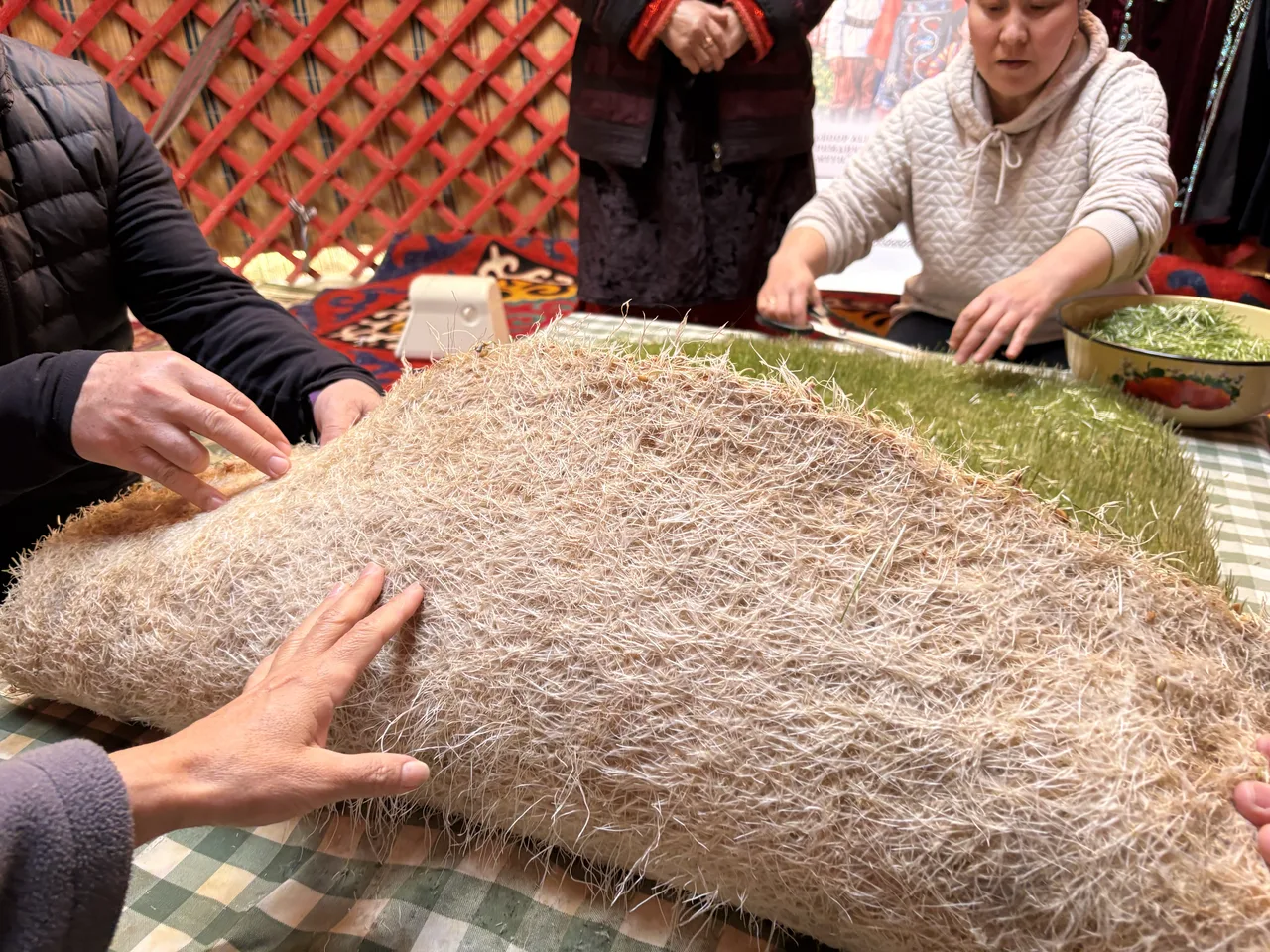
Everything begins long before the fire is lit beneath the cauldron. Choice wheat is soaked and spread out on special wooden trays. Over several days the women tend the grains with care, waiting for them to give lush green sprouts. In this moment the wheat accumulates immense natural energy. By the covenants of the ancestors, the grain must be sprouted only with pure thoughts and good intentions, for the future malt is a symbol of the birth of new life, of cleansing and of the health so needed by mountain communities after a long winter.
Sprouting the wheat (3–5 days)
This is the most important stage. We need to start the malting process, in which starch turns into sugar.
RinsingRinse the wheat thoroughly in cold water and remove all debris and the empty grains that float up.
SoakingCover the wheat with clean water and leave it for 24 hours.
SproutingDrain the water. Spread the grains in an even layer (no more than 1.5–2 cm thick) on clean wooden boards, trays or clean cloth.
CareCover the grains with damp gauze. Place them in a warm, dark spot. Every day (2–3 times) mist them with clean water from a sprayer so the gauze does not dry out.
ReadinessThe wheat is ready when the sprouts reach 1–1.5 cm and turn white or light green.
ImportantDo not over-sprout the wheat! If the sprouts grow too long and bright green, the sumolok will taste bitter.
Extracting the wheat juice: Drawing out the life force
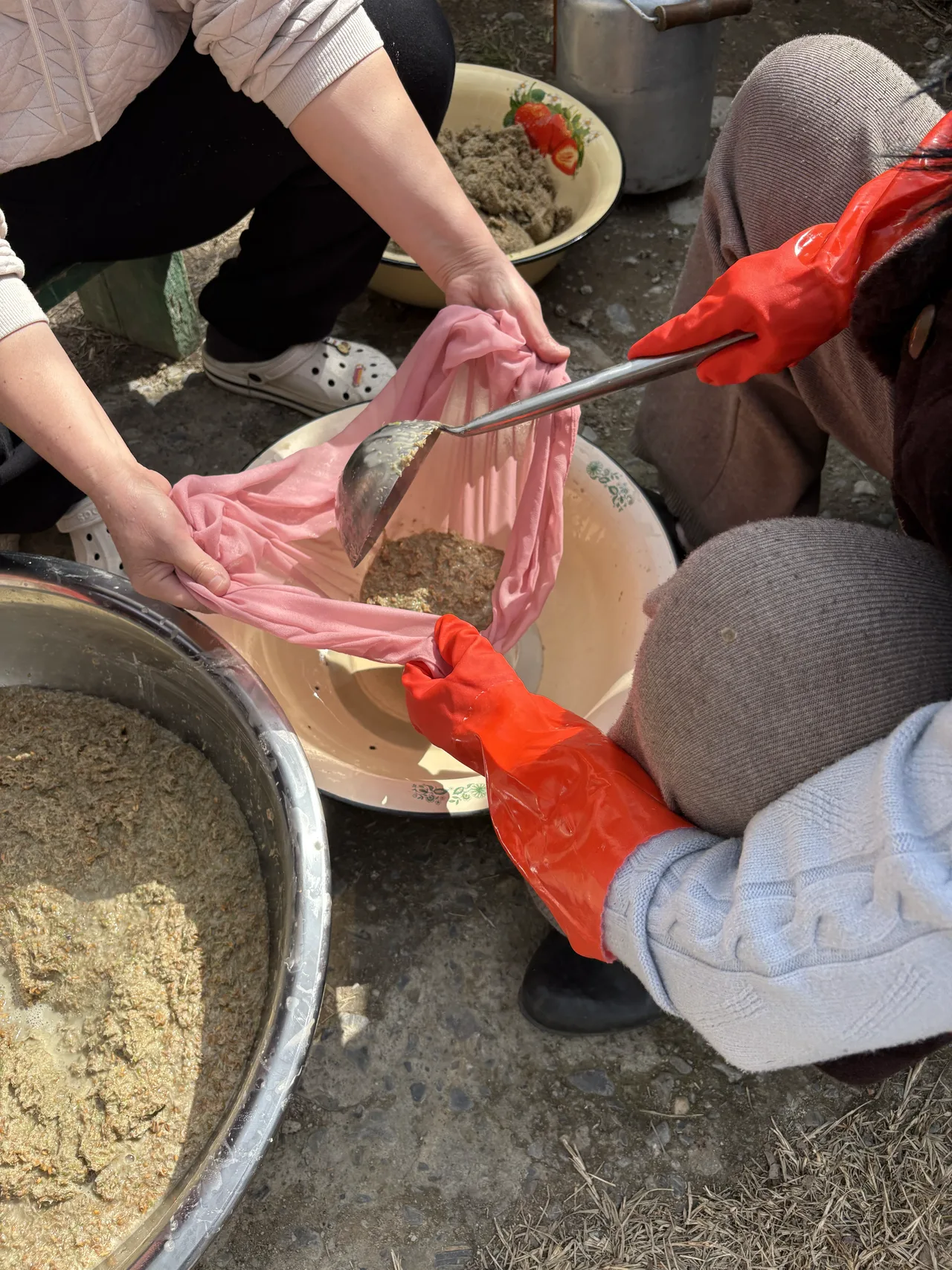
Once the grains have given perfect sprouts, one of the most laborious and mesmerising stages begins — extracting the sweet wheat milk. The sprouted wheat is thoroughly ground and rinsed with water several times, literally washing out everything most valuable. The resulting mass is strained through dense cloth, pressed to the very last drop.
This concentrated, emerald juice is true liquid gold and the heart of the future sumolok. It holds the encrypted secret of the dish’s natural sweetness: during cooking, the starch from the juice breaks down into natural sugars. For the “Living Wisdom of the Mountains” project this stage is a vivid demonstration of ecological purity: our ancestors created a unique dessert without a drop of chemistry or artificial sweeteners, using only the clean energy of mountain nature and manual labour.
Extracting the wheat juice
GrindingGrind the sprouted wheat (put it through a meat grinder or blend it thoroughly, adding a little water).
First pressingTransfer the resulting mass into a deep bowl, pour in a little water (about 1.5–2 litres), mix well by hand and press it through gauze into a separate vessel. This is the first pressing (the most concentrated).
Second pressingPour water over the remaining pulp again (another 1.5–2 litres), mix thoroughly and press. This is the second pressing.
Third pressingRepeat the procedure a third time. This is the third pressing.
Wheat milkIn the end you will have three portions of wheat milk of different concentration.
FinishingThe pulp is no longer needed.
Mixing and cooking — The great culinary mystery
When all the ingredients are ready, the space around the cauldron turns into a real creative laboratory, with the women of Toktogul as its chief directors. Cooking sumolok is a complex technological and sacred process that demands perfect coordination and collective effort. The ritual uses a massive, thick-walled cauldron able to hold and evenly distribute the heat of the fire for hours.
The process begins with an ancient and symbolic step — frying ritual flatbreads. The women heat the oil and bake plump dough in it first. This is not merely a culinary trick that removes the specific smell of the oil, but also a tribute to the ancestors: the aroma of fresh baking traditionally heralds the well-being of the home.
While the oil cools, work on the base bubbles up nearby. In deep vessels wheat flour and portions of fresh wheat milk are combined. To speed things up and achieve absolute, silky uniformity without a single lump, today’s keepers of tradition skilfully blend the ancient and the modern, using kitchen mixers.
Then comes the moment of laying the sacred stones: clean, round river pebbles are gently lowered to the bottom of the cauldron to protect the thick dish from scorching. The liquid dough is poured into the cauldron in a thin stream, and the great marathon of simmering begins.
Mixing and cooking
Frying the flatbreadsPour oil into the cauldron and heat it well. Before you start cooking the sumolok, fry flatbreads in this oil (a traditional ritual). Take the flatbreads out and let the oil cool a little.
Preparing the mixtureIn a separate deep vessel combine the wheat flour and the portions of wheat milk. To make the process faster and the mass perfectly uniform, without lumps, whisk it thoroughly with a kitchen mixer or a whisk to the consistency of a thin batter.
Laying the stonesOn the bottom of the cauldron with the cooled oil place clean, ready round stones (or walnuts). They will keep the mass from scorching during the long boil.
Starting the boilBegin gradually pouring the mixture into the cauldron with the stones and oil in small portions. Stir the mass constantly. Bring the mixture to a boil over medium heat, then immediately lower the flame to a minimum.
The day-long marathon: The warmth of the fire and a dialogue of generations
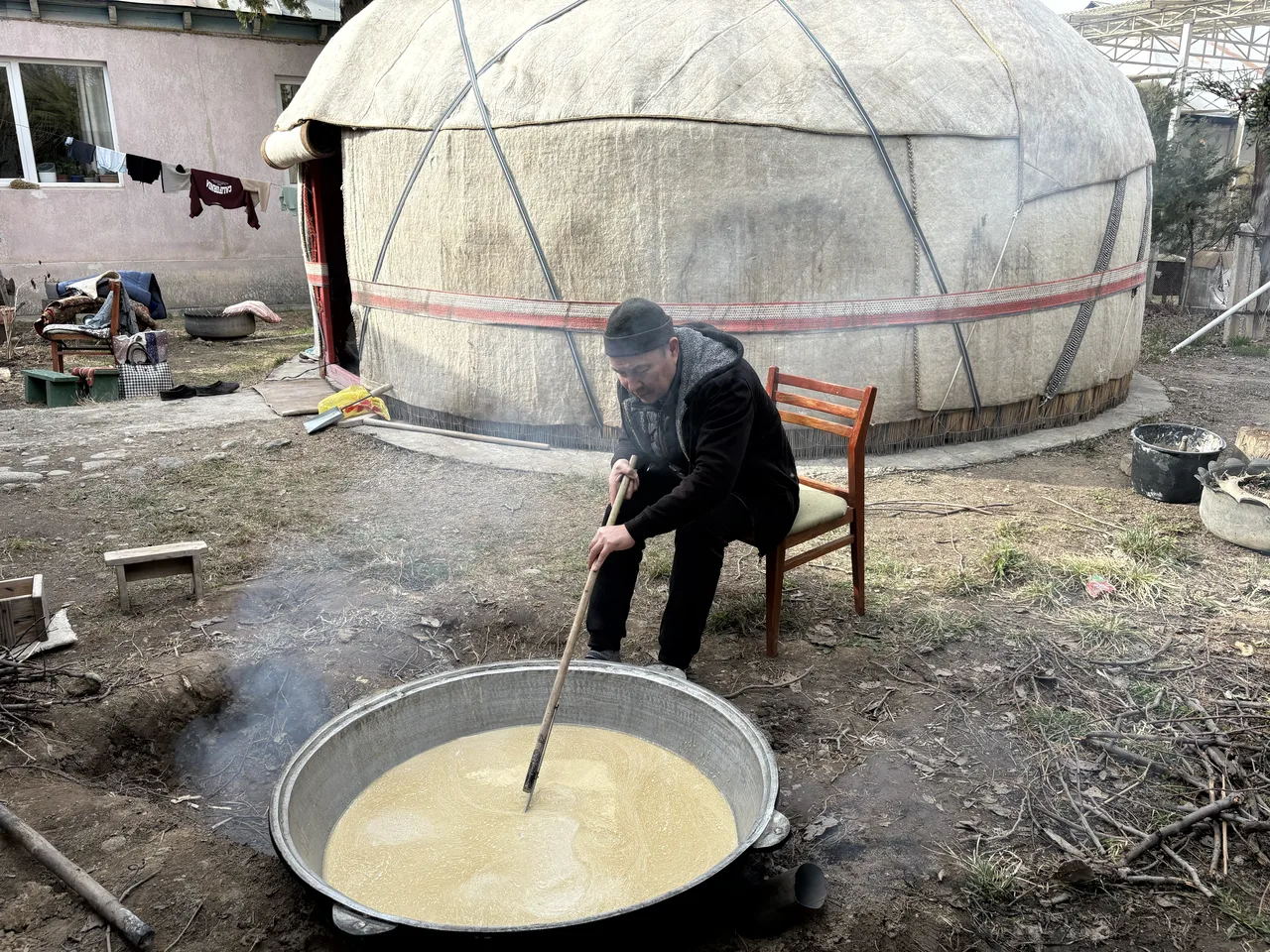
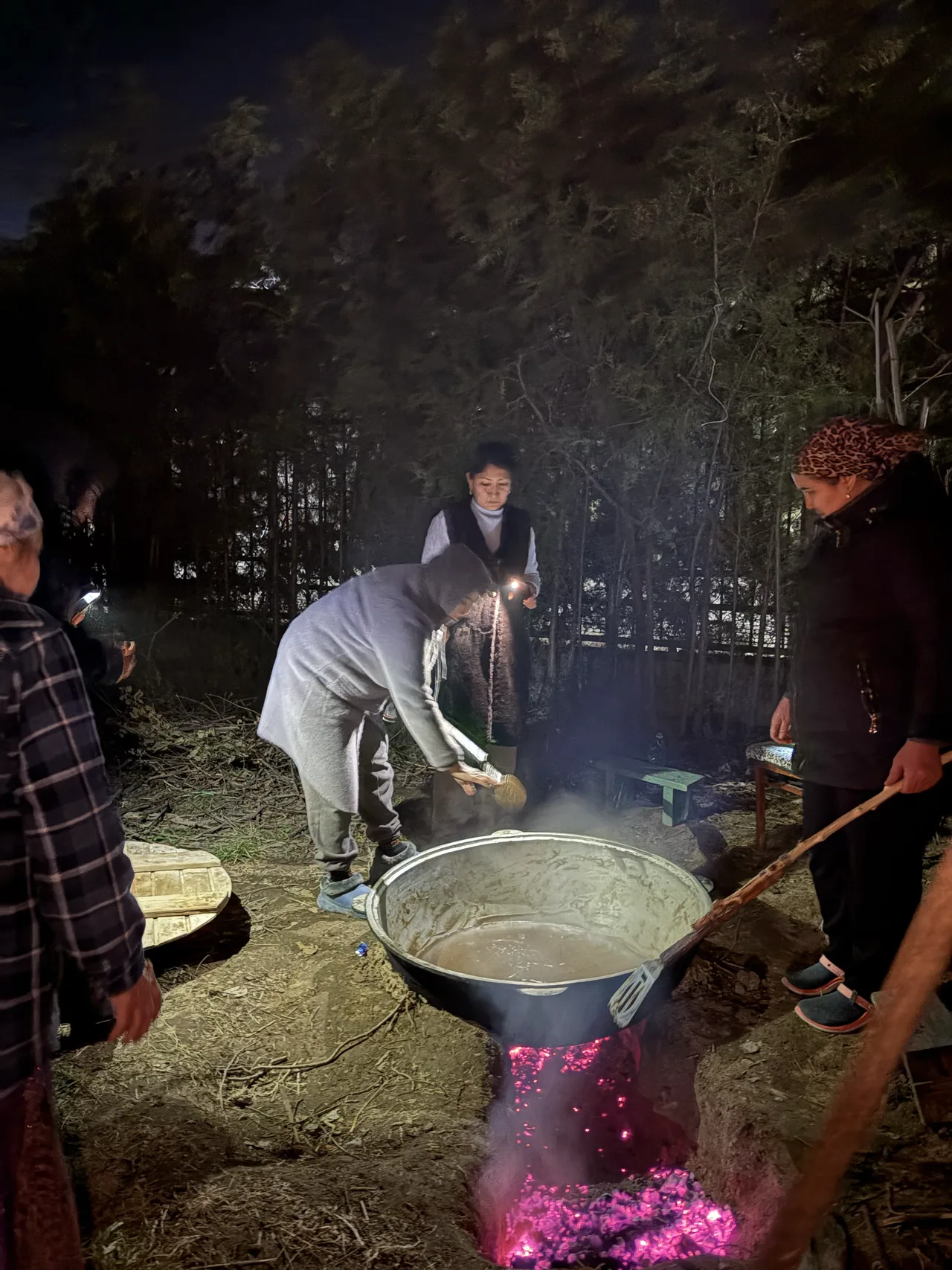
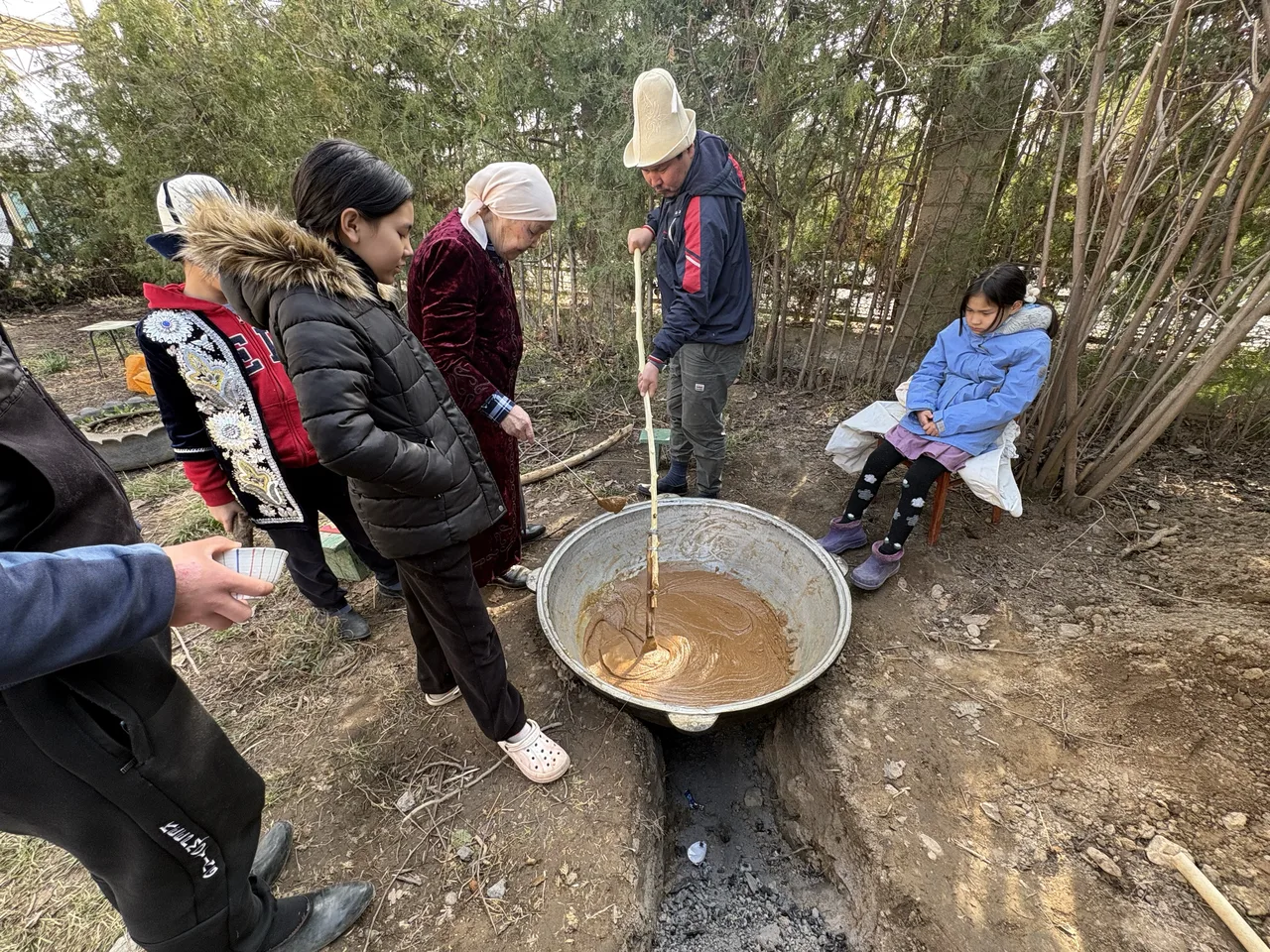
As soon as the cauldron comes to a boil, the hardest and most responsible trial begins — the mass must not stop for a single second. Over the next 10–12 hours the sumolok simmers over a slow, barely visible fire, bubbling without pause. It demands absolute, unbroken attention: the thickening dish must be stirred constantly and thoroughly with special wooden paddles, running along the very bottom of the cauldron. This is genuine, heavy physical work that is simply impossible to manage alone.
It is in these long hours that the true magic of ashar is revealed — the ancient tradition of selfless mutual aid, along with the strength of women’s solidarity and support. People from all over the village come to the fire and take turns at the cauldron literally every hour.
But continuous labour is only the outer side. The main mystery of the night lies in a special ritual, for which everyone strives to hold the heavy wooden paddle in their hands for at least a few minutes. It is believed that while you stir the bubbling sumolok, your thoughts rise straight to the sky. In that moment people close their eyes, make their most cherished wishes and mentally turn to the higher powers with their dearest dreams, asking for the health of loved ones, peace in their native land and abundance in their homes.
The night by the fire becomes that very “Living Laboratory” of our project — a space of sincerity and spiritual unity where time seems to slow down. Taking turns, supporting the team with jokes, songs and warm conversation, the people of Toktogul carry out this profound rite. To the crackle of firewood and the enchanting sounds of the komuz, the gap between generations dissolves completely: local youth put aside their smartphones to entrust their hopes to fire and sky together with their elders. Before the eyes of the project’s participants, the white mass gradually thickens, darkens and deepens into a noble chocolate-caramel colour, absorbing the warmth of the night flame, the wisdom of the ancestors and the power of hundreds of pure human wishes.
Simmering (8–12 hours)
The long cookThe sumolok should simmer over low heat and bubble continuously. It must be stirred constantly and thoroughly with a wooden paddle, running along the very bottom of the cauldron.
SimmeringThe simmering takes 8–12 hours on average.
The finished colour and textureThe mass will gradually thicken and change colour, turning into a beautiful chocolate-caramel paste.
Opening the cauldron: The pattern of fate and the final Bata
At dawn the fire dies down and the sumolok is left to “rest” under a tightly closed lid. The morning of Nooruz brings the long-awaited climax of the ritual — “kazan achuu” (the opening of the cauldron). By tradition, a unique pattern should appear on the cooled brown surface of the finished dish, resembling the outlines of mountains, birds or an angel’s wings — a good sign for the whole village. The ritual ends with a solemn blessing (bata) from the community’s elders. The hot sumolok, smelling of caramel and spring, is ladled into bowls to be shared with every family in the district. The ritual is complete, but the knowledge recorded by our cameras will now remain in the project’s digital memory forever.
«While you stir the bubbling sumolok, your thoughts rise straight to the sky.»
Ingredients
The base proportion
For convenience, let us take a base proportion. It yields enough of the treat to share with friends and neighbours.
Wheat (preferably hard varieties)
0.5 kg
Wheat flour
2 kg
Vegetable oil (calcined cottonseed or sunflower)
400–500 ml
Water
about 5–6 litres (needed for pressing the juice)
Round clean stones (in-shell walnuts)
10–12 pcs
A traditional element that keeps the sumolok from scorching.