Making base felt: From sheep's wool to a finished cloth
“Making traditional felt is not just the mechanical compression of fibres, but a real collective ritual, where sheep's wool turns into a strong material under hot water and coordinated action. These techniques cannot be learned from instructions alone — here it matters to feel the density with your hands, passing the craft from person to person.”
The step-by-step process
Preparing and laying out the base
Wetting the cloth and rolling it up
Felting in the roll
Final hand-fulling
Preparing and laying out the base
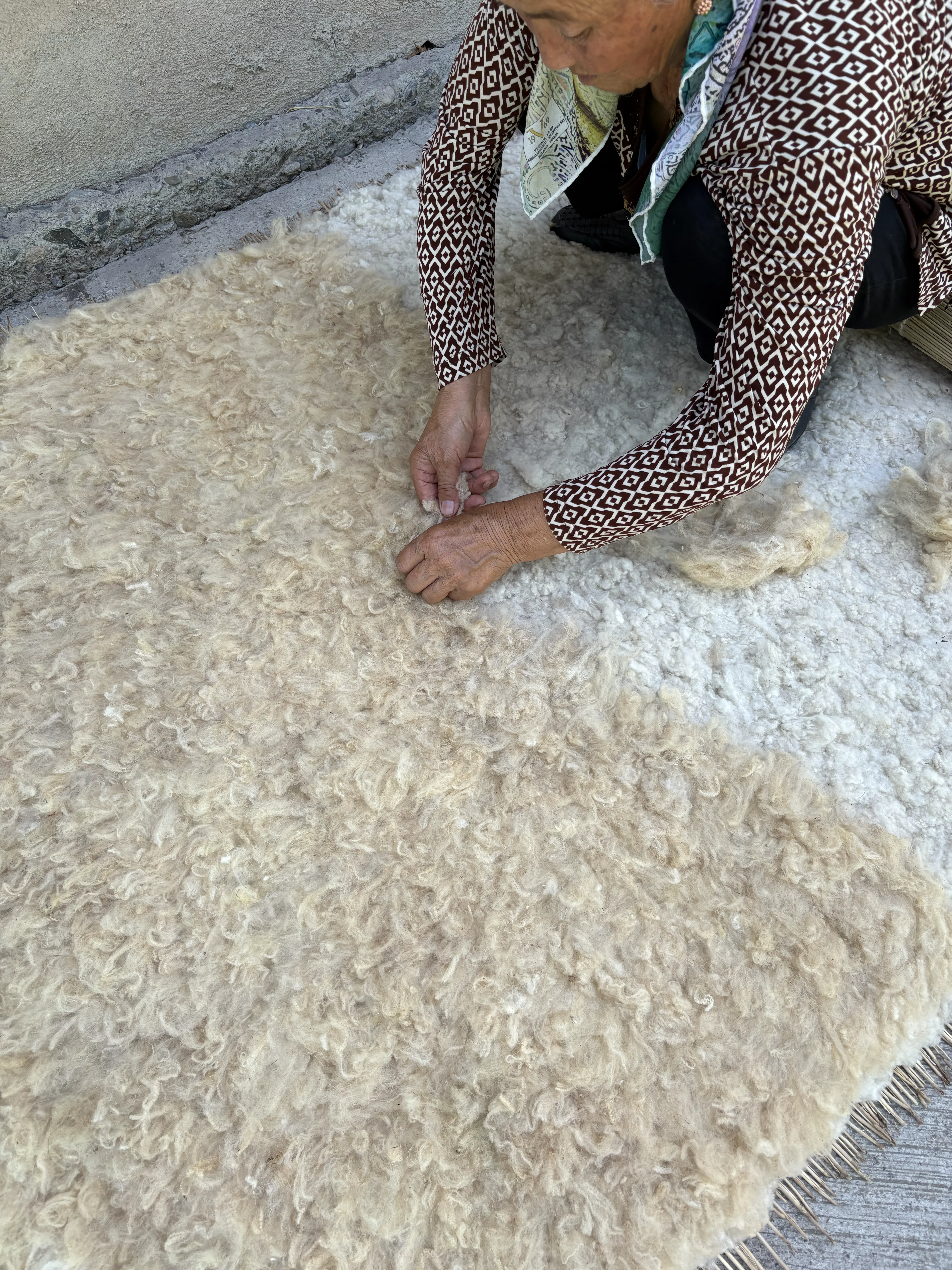
The first step lays the foundation of the future cloth, where the chaotic fibres of sheep's wool find order for the first time. Cleaning and beating the wool with rods fills it with air, and the careful layout on the traditional reed mat (chiy) demands the maker's utmost concentration and eye. Every lock of wool must lie perfectly even, building a solid foundation that leaves no room for flaws.
The workThoroughly clean the sheep-wool fibres of debris. Then beat the wool with rods to fluff it. Lay it out in even layers on the mat, gradually forming a uniform base for the future felt cloth.
Important: Control the thickness of the layout, so the finished felt has no holes or over-thickened spots.
Wetting the cloth and rolling it up
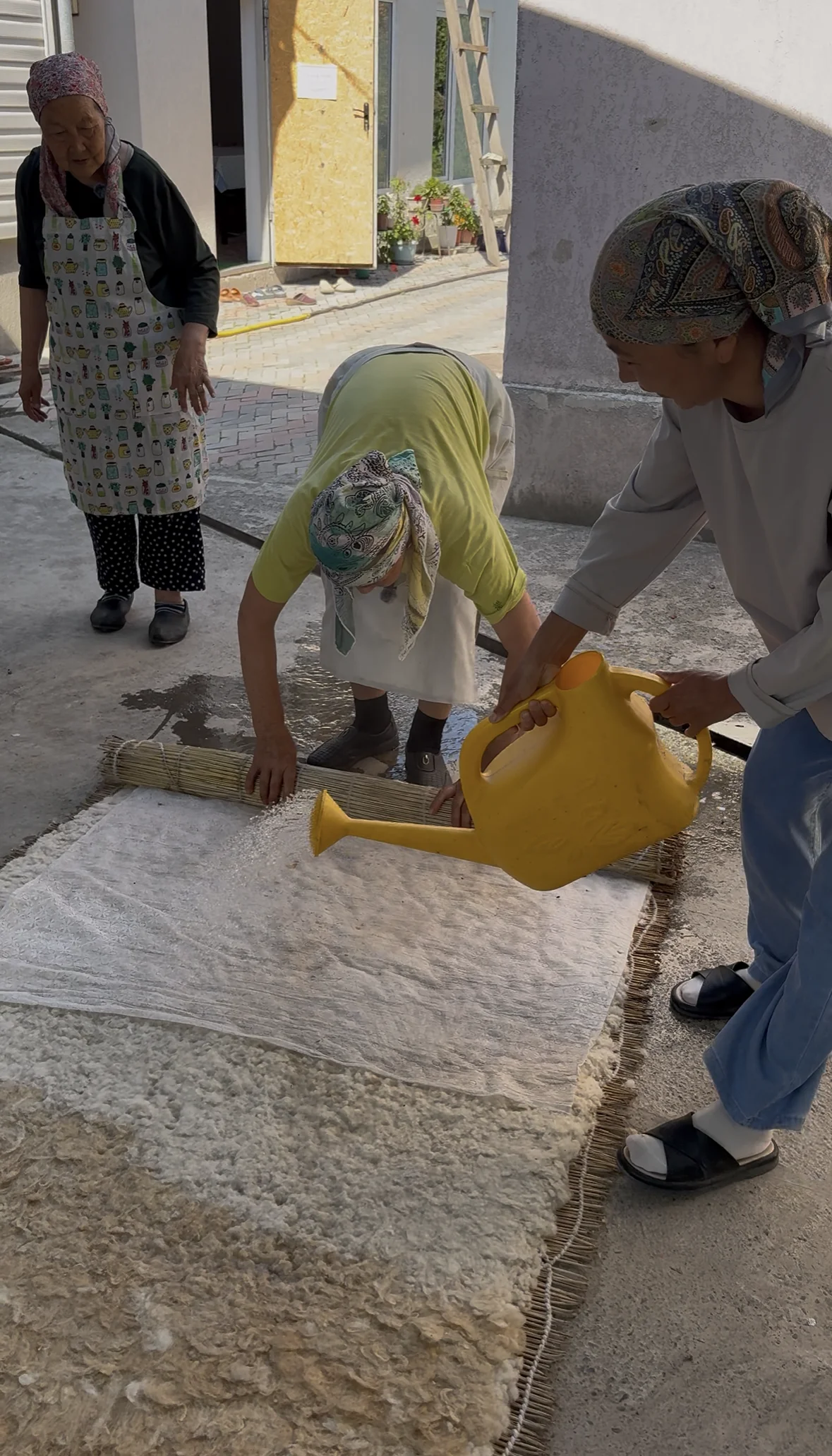
Once the wool is laid out, the moment of its awakening arrives. Hot water acts as a real catalyst: it melts the natural lanolin and makes the wool scales open towards one another. Rolling the cloth into a tight roll together with the mat is like an ancient sacrament, where gentle warmth is sealed inside, firmly fixing the layers of wool.
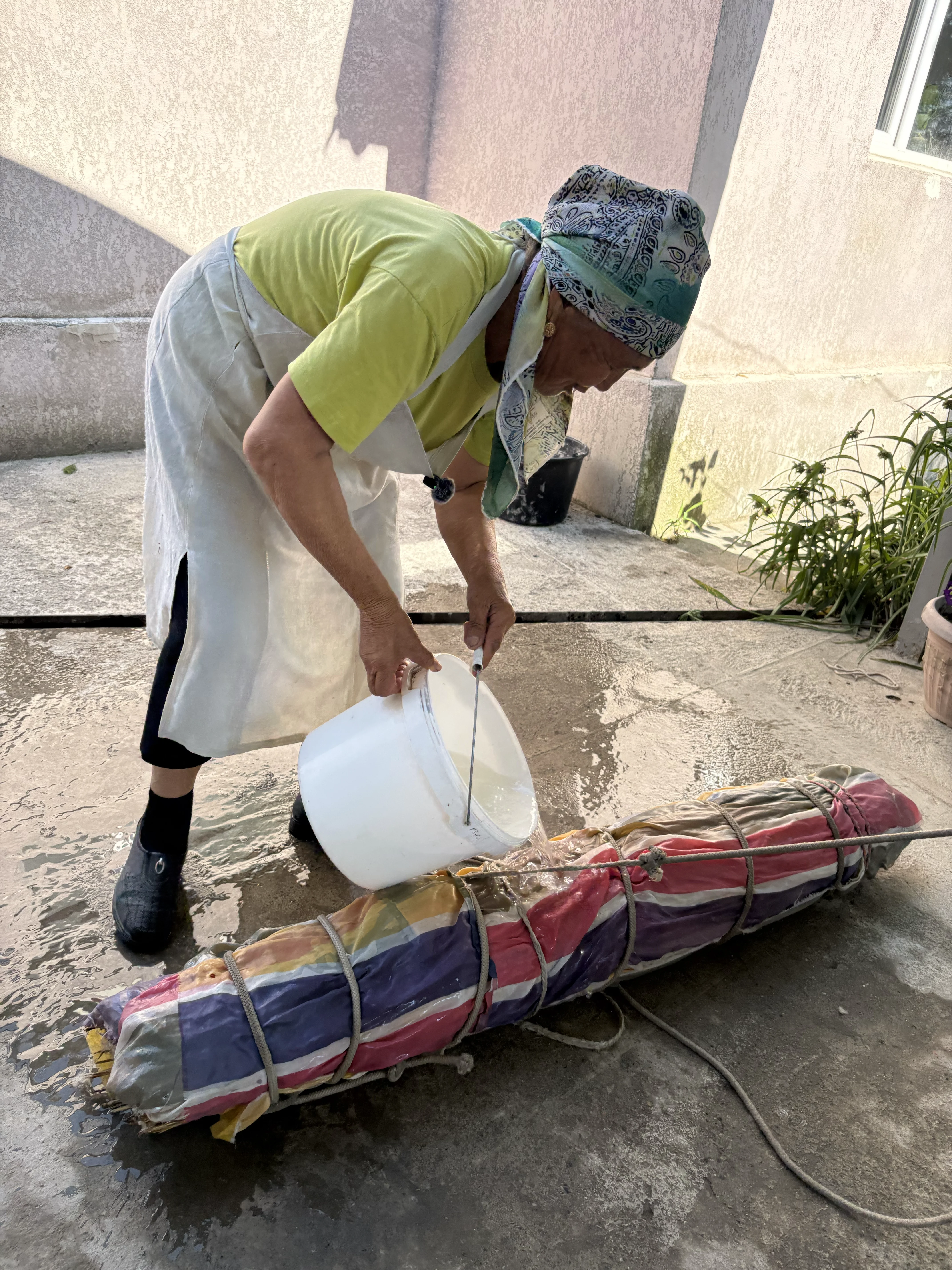
The workLine the starting part of the roll with cloth so the order of the fibres is not disturbed as you roll. Wet the laid-out wool generously with boiling water, pouring carefully from the watering can.
Rolling upCarefully roll the cloth up with the mat into a tight roll and tie it firmly with rope in three places. To make the mat last longer, additionally wrap it in dense cloth and tie it again with ropes.
Important: The water must be hot enough (boiling) to effectively dissolve the natural lanolin in the wool — this is exactly what starts the bonding process.
Felting in the roll (the active stage)
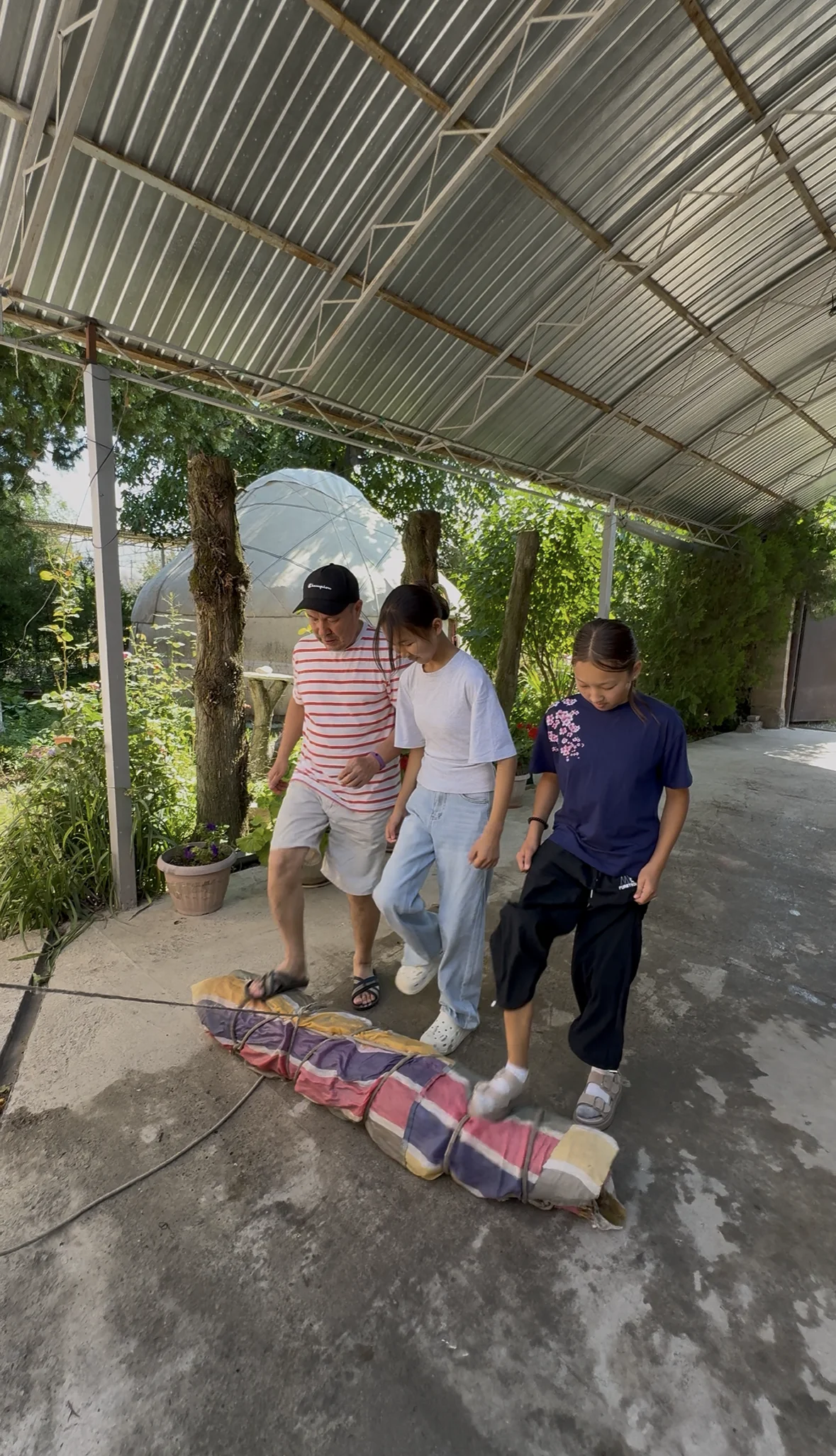
Here begins the most dynamic, rhythmic and truly unifying stage. Felting the felt in the roll is a collective marathon, in which whole communities traditionally take part, young and old. Under the monotonous knocking, the strikes of feet and the constant rolling of the roll along the ground, the wool felts, compresses and interlocks fast. This is the pure energy of shared labour, turning a scattered mass into a single monolith.
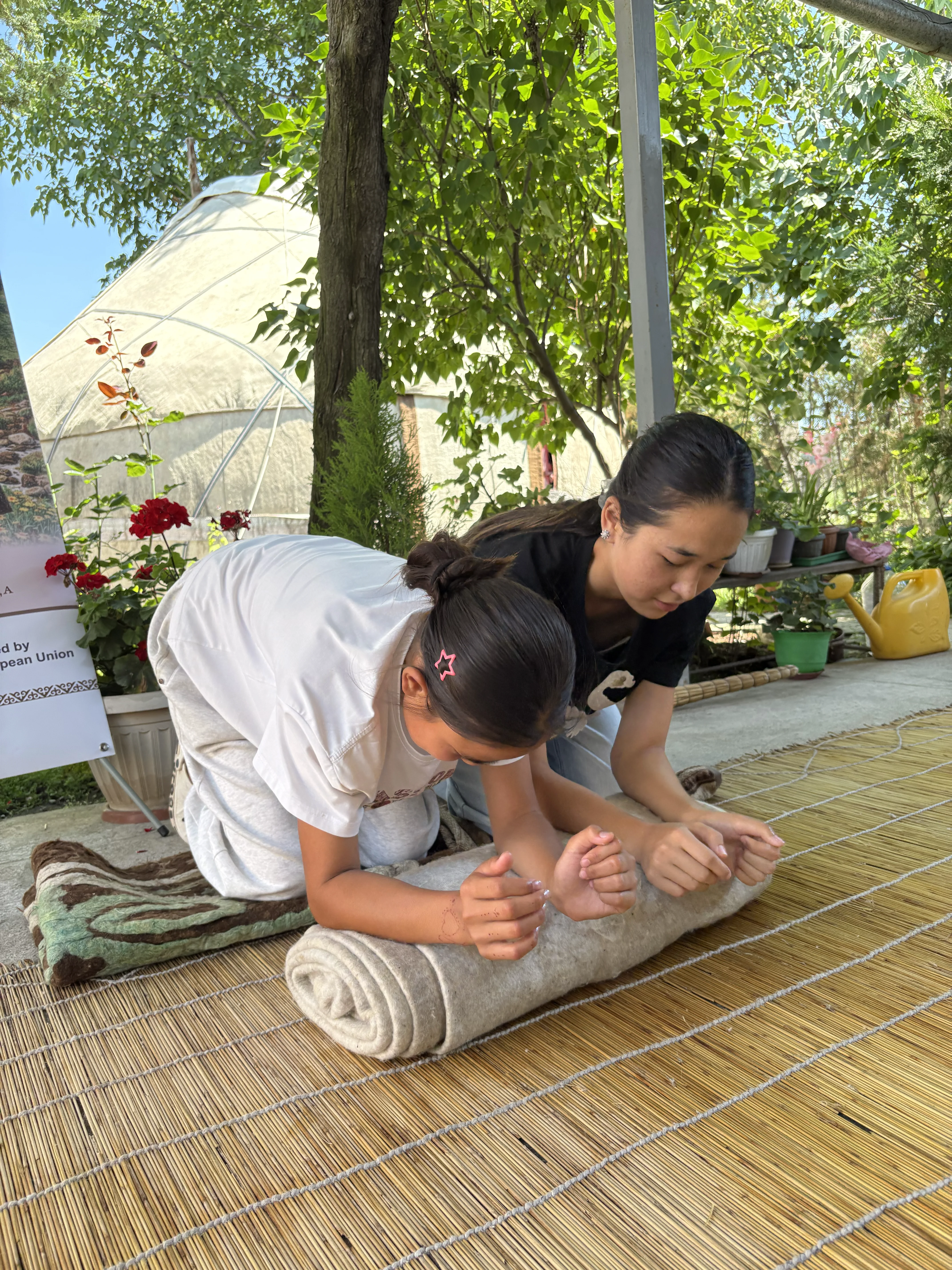
The workBegin the most active stage — rhythmically roll the roll along the ground and beat it with your feet, actively drawing on the collective labour of adults and children.
TechniqueStart with light strikes, and as the felt compacts, increase the force of the foot strikes. It is the constant pressure that helps the wool fibres bond reliably to one another.
CyclingRoll the roll 3–4 times for 15–20 minutes each, pouring hot water over it again every time.
Ending the stageStand the roll upright, pour water over the top and wait until it fully drains through it.
Important: Do not let the cloth dry out; regularly add hot water to the roll.
Final hand-fulling
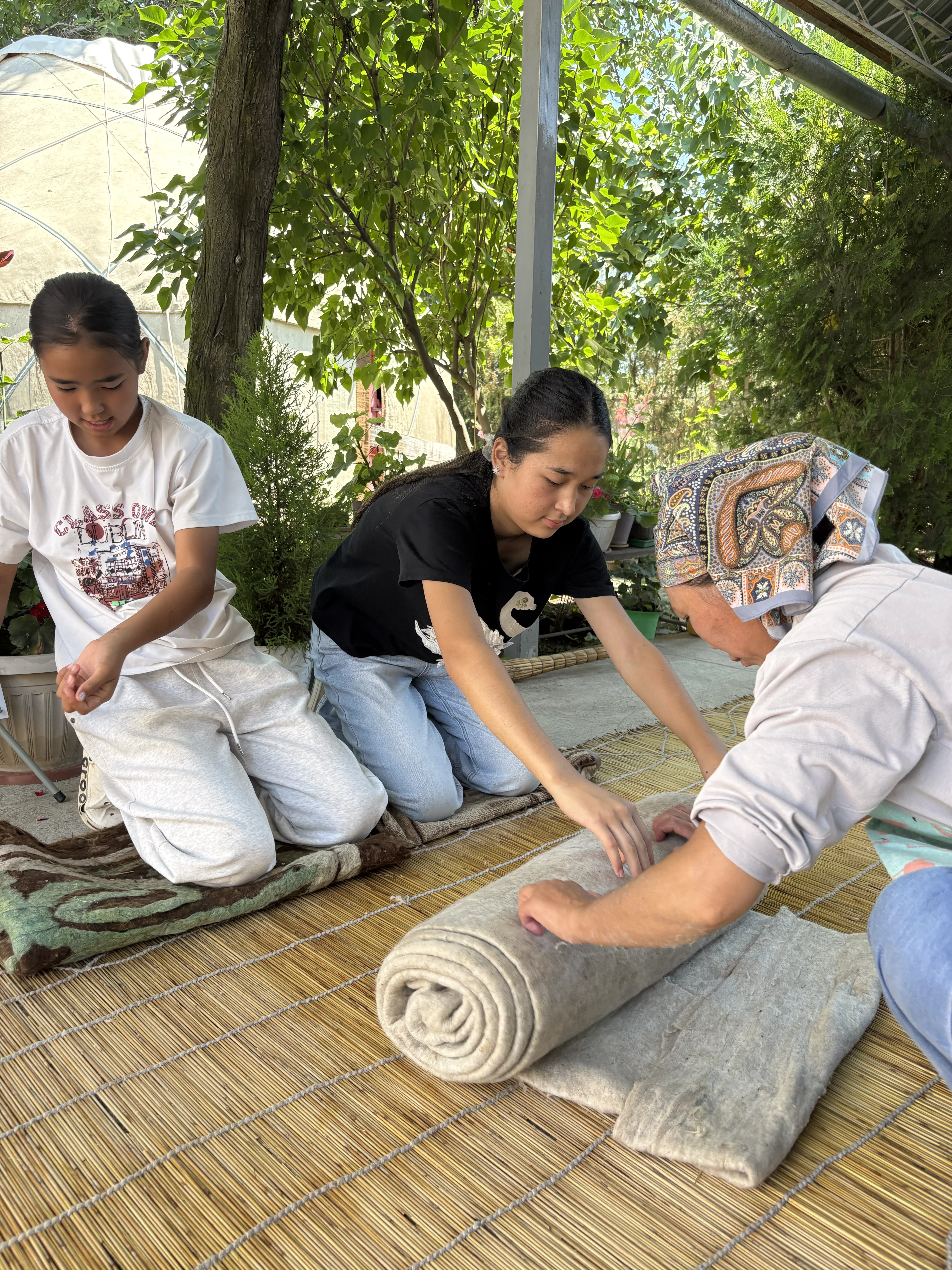
After the turbulent, active stage comes the time for quiet, meticulous work and an attentive dialogue between the hands and the material. The craftswomen unroll the roll to breathe life into the details. Folding the resulting cloth and gently kneading it with their palms, they feel every unevenness, smooth out the thickenings and check the felt's density until it fully matures. This is the final chord, turning the fruits of collective effort into a flawless, noble cloth.
The workUnroll the roll and fold the resulting cloth in three along its length. The craftswomen knead the felt by turns, checking its density and evening out individual areas until the material is fully ready.
Important: Be sure to change the position of the roll, and periodically unroll and re-roll it from the opposite end for the most even compaction of the cloth.
Materials and tools
Sheep wool (cleaned)
Hot water (boiling)
Reed mat (chiy)
Strong rope
Dense cloth (to protect the mat and fix the layout)